Realize business potential with Gen AI this holiday season

The holiday season is quickly approaching, and retailers are gearing up for one of the biggest shopping seasons of the year as customers sort through a deluge of promotions across retailers. Email inboxes overflow with offers, and customers face overwhelming choices as they try to identify the best deals, which come in generic promotions for items they’ve already purchased – all of which just adds to their frustration.

This is where Artificial intelligence (AI) can deliver exciting opportunities for retailers to elevate their game this holiday season. Most experts would agree that retailers should approach AI thoughtfully, balancing customer needs, retailers’ immediate campaign needs, and overall corporate goals of growing the business.

Using generative AI to humanize interactions

Customers expect personalized shopping experiences. Until recently, sophisticated commerce, marketing automation, and advertising platforms used what you already knew about your customers to target them for new purchases. While using AI, you can create highly detailed customer profiles based on online behaviors, purchase history, and product reviews to predict future needs better, we are seeing an increasing need for humanized interactions.

Generative AI presents an enormous opportunity to uplift the customer experience by having human-like conversations with customers. This can take the form of online assistants that engage in human-like conversations with customers to solve issues and answer various questions. Generative AI can also simultaneously analyze thousands of product reviews and user images to generate a personalized summary tailored to the reader’s interests, level of understanding, and background. There are many applications for generative AI in this context.

Key example: a non-technical grandfather is presented with information and reviews about a product that generative AI tailors to his understanding while buying a technology gift for his grandson.

Establishing generative AI readiness

While AI can unlock big opportunities for the holiday season, retailers should identify high-value use cases to test the technology and take the key learnings from technical, functional, and business standpoints. As generative AI evolves, it may learn to use such data to dive further into other elements of the business, such as production and resource planning, and even direct collaboration with suppliers. Consider using these key steps to lay the proper AI groundwork and drive generative AI adoption for your company.

  1. Resources: Put the right team in place, as AI requires a different type of technical resource. This team should be comprised of professionals who understand data science, AI models, and their outputs, data ethics, and the details behind algorithms.
  2. Data: Carefully evaluate data sources since AI depends on high-quality data. Before embarking on your AI journey, analyze available data on inventory, customers, pricing, promotions, etc.
  3. Data Governance: You’ll need to document the data used for AI and implement access controls and policies to ensure quality, privacy, and compliance.
  4. Testing: Testing AI models is essential to fix issues before going live.
  5. Data/AI Ethics: Adopt AI responsibly, be ethical, and set realistic expectations about what AI will deliver.
  6. Security: AI comes with its own unique security risks your team needs to be ready to handle, things like AI-enhanced cyber attacks, data poisoning, model theft or inversion, evasion attacks, and more – all of these risks mean your team needs to be ready.
  7. Infrastructure: Plan for future growth by implementing the technical infrastructure needed for the continued development and expansion of AI capabilities.

Let us work together to achieve your AI vision

We are focused on helping you overcome business IT challenges that relied on our:

  • Expertise and Experience: With a focused practice on AI and machine learning frameworks, we are a forward-thinking company with expertise to understand complex systems and recommend data-driven solutions tailored to your unique needs.
  • Industry Insight: We understand the pressures businesses face today and how emerging technologies like AI can drive real impact.
  • Commitment to Transformation: We view AI as a journey of continuous learning and improvement and are constantly expanding our capabilities to transform operations with AI.
  • Trusted Governance Approach: With rigorous processes like an annual ISO 27001 audit, we can provide the governance required to ensure customer data ethics and privacy.

Tap into our expertise to turn your organization’s AI vision into reality. We have helped many customers across all verticals realize theirs. Contact us today to see how we can do the same for you.

Strengthening your business strategy with data, analytics, and AI

During the recent meeting at American Chamber of Commerce in Costa Rica (AmCham), I shared the evolving landscape of data, analytics, and AI (Artificial Intelligence), emphasizing their role as pivotal tools in modern business strategy and decision-making to 40 participants. In this blog, I added analyst observation and two use cases on the paradigm shift in using AI.  

Today, every click, every transaction, and every interaction is a treasure trove of insights. The digital age is amassing data at an unprecedented rate. We harness the capabilities of data, analytics, and AI, to help our customers extract invaluable insights to drive innovation and operational efficiency.

As Chris Howard, Distinguished VP Analyst and Chief of Research at Gartner, highlights, “For example, generative and other types of AI offer new opportunities and drive several trends. But deriving business value from the durable use of AI requires a disciplined approach to widespread adoption along with attention to the risks.” This disciplined approach towards AI adoption underpins the transition from a reactive stance to a proactive one, fostering a culture of continuous learning and innovation.

The synergy of data, analytics, and AI allows businesses to transition from a reactive stance to a proactive one. It’s not just about understanding what has happened but predicting what will happen next. Predictive analytics, a shining star in this new era, is empowering businesses to anticipate market fluctuations, customer behaviors, and operational dynamics, enabling pre-emptive strategies and agile business models. Moreover, real-time data processing is transforming the way businesses respond to evolving situations, allowing for immediate actions, adjustments, and uncovering unmet needs.

Highlighting the real-world impact of AI with Beyondsoft

Our journey in harnessing AI began over five years ago, to drive sales growth through machine learning. One exemplary case is our collaboration with a Seattle-based premium cruise line. Through behavior-backed analytics, we were able to garner insights into the profitability of various amenities, enabling the cruise line to make informed pricing adjustments. This not only increased revenue but also enhanced their ability to upsell new services to passengers with similar profiles and consumption behaviors.

Moreover, our endeavor with a leading low-cost airline showcases the potential of AI to generate more revenue.  Utilizing purchasing behavior patterns, we helped the airline identify passengers most likely to opt for additional purchases. This enabled highly targeted campaigns and dynamic pricing strategies, thereby increasing sales. Further analysis revealed new revenue streams, exemplifying how data, when utilized effectively, can significantly impact a business’s bottom line.

Fast forward to today, we’ve enriched our AI toolkit with a chatbot, machine learning, and generative AI, striving to provide accurate and contextually relevant information. The integration of BIOPs™, a familiar AI foundational engine to many of our customers, that houses the auto machine learning framework and facilitates the creation of a diverse range of AI services to the multifaceted AI platform.

AI: The unfurling horizon of possibilities

AI is not just about automation; it’s a canvas of creativity, personalization, and a wellspring of continuous learning and innovation. It enables businesses to craft bespoke customer experiences, and tailor products, services, and communications to individual needs, enhancing customer satisfaction while fostering loyalty and long-term engagement.

In the realm of strategic planning and decision-making, AI acts as a visionary, enabling businesses to foresee opportunities and challenges, and facilitating strategies that are both resilient and forward-thinking.

Next steps

At Beyondsoft, we don’t view data, analytics, and AI as mere tools but as catalysts for innovation. Our approach is holistic. By intricately weaving data strategy, AI, machine learning, and business intelligence, we aim to create solutions that are tailored, efficient, and future-ready. It’s not just about data; it’s about crafting narratives, telling stories, and driving meaningful change.

If you are looking for a leader in data and analytics and would like to consider exploring AI to strengthen your business strategy, tap into our expertise to shape your business outcomes. We’ll help you translate concepts into tangible applications and develop an AI strategy to secure leadership support. Reach out to us today.

References

  1. Gartner Identifies the Top 10 Strategic Technology Trends for 2024
  2. How machine learning unlocks data to target customers & drive sales – Beyondsoft Consulting
  3. Transforming Knowledge Management using Generative AI – Beyondsoft Consulting

Beyondsoft unveils Cloud Center of Excellence as a Service

Digital transformation has evolved in recent years and cloud technology is more than an enabler in business transformation. It is a key component to drive business forward. Cloud technology powers applications, data infrastructure and AI. The next wave of digital transformation is to embrace the concept of the Cloud Center of Excellence (CCoE) to expedite the adoption and governance of cloud solutions.

A Cloud Center of Excellence is typically a multidisciplinary team that provides leadership, best practices, standardized operational processes, as well as support and training to help you quickly address business problems with the adoption of cloud technologies.

According to Gartner research, more than 85% of organizations will adopt a cloud-first approach by 2025 and will not be able to fully execute their digital strategies without using native cloud architectures and technologies. This underscores the importance of robust adoption and governance strategies for these technologies for businesses.

“As a Service” Approach

Beyondsoft’s Cloud Center of Excellence serves as an extension of your team regardless of the stage of your cloud adoption. With CCoE you adopt cloud technologies quickly and securely to meet your business objectives. We are your ally to optimize cloud costs. CCoE is a viable alternative to those who need just-in-time expertise for a short or long-term cloud project. Our suite of Microsoft specializations validates our expertise in delivering scalable cloud projects with measurable outcomes.

“Choosing a Cloud Center of Excellence (CCoE) as a Service provides you with immediate access to expert guidance, speeding up the adoption and optimization of the cloud without the prolonged setup and costs associated with establishing an in-house team. By using external experts, you reduce the risks associated with costly cloud implementation errors, allowing your team to focus on their core business functions while running cloud operations efficiently,” says Alexandre Perazza, global leader of solutions and services at Beyondsoft.

The CCoE plays a crucial role in security, establishing practices and controls that ensure data and applications are protected in the cloud and complies with your internal governance, regulatory requirements, minimizing risks and promoting secure usage.

Integration with AI

The unification of generative AI into a CCoE creates a dynamic and personalized approach to cloud management. With AI-driven insights, infrastructure implementations are rigorously tailored to specific needs, ensuring efficiency and cost savings. AI’s ability to proactively generate security policies in response to evolving threats ensures robust and compliant cloud environments. Moreover, the rapid generation of ideal solution architectures and proactive problem-solving skills reduce the time between design and implementation, reducing potential disruptions and ensuring customers have a simplified and resilient cloud journey.

Here are some specific examples of how AI enhances the CCoE’s capabilities and provides real value to customers:

  • Dynamic Resource Optimization: AI can continuously monitor cloud resource usage and apply predictive analytics to optimize resource allocation based on demand. This means that you pay for what you use. This leads to significant cost savings and more efficient cloud operations.
  • Predictive Maintenance and Security: AI can detect anomalies in cloud infrastructure and data, predicting potential system failures or security breaches before they occur. By proactively identifying and addressing these issues, AI helps prevent downtime, data loss, and security incidents. This not only cuts down on downtime cost but also enhances the overall security stance.
  • Proactive Problem Solving: AI-driven insights can help CCoE teams rapidly generate ideal solution architectures and proactively address potential issues. This reduces the time between design and implementation, minimizing disruptions, and ensuring you have a smoother and more resilient cloud journey. You can benefit from solutions that are continuously refined by AI, leading to greater efficiency and innovation.
  • Compliance and Governance: AI can assist in establishing and enforcing governance standards, ensuring cloud adoption aligns with regulatory requirements. By continuously monitoring compliance and automating policy enforcement, AI minimizes risks associated with non-compliance and ensures secure usage of cloud resources.

“By integrating AI in our CCoE approach, we offer responsive, tailored services. AI-driven insights lead to efficiency, cost savings, and innovation, benefiting you and your team,” emphasizes Perazza.

With CCoE, WeVets, our customer, improved IT environments and saved up to 40% on total operation costs. WeVet adopted governance practices on financial efficiency which led to cost predictability, risk mitigation, and accurate decision-making process.  

Next steps

Tap into our expertise to strengthen your organization’s cloud operations and security posture. We have helped many customers across all verticals to improve their cloud operations. Contact us today to see how we can do the same for you.
Cybersecurity: 8 proven ways to level up your security management operations

This blog is co-authored by João Labre – Director of Modern Work and Security, and Antonio Briceño, Country Manager for Costa Rica.

You’re navigating the ever-changing threat landscape, and you know that building the muscle for robust security operations is paramount. Protection from a technology or SaaS solution only takes you so far. You need to develop a culture of security awareness to seriously understand and honestly assess security awareness at all levels.

We share our tried and tested strategies to enhance your organization’s security management posture. As cybercrime becomes more prevalent, adopting a reactive approach could not only divert resources away from your core objectives  – it could also inflict irreparable damage to your credibility.

1. Cybersecurity is an Organizational Priority

Effective defense strategies against cyberattacks begin with acknowledging that security is not just an IT concern. CEOs and senior executives must lead by example  – modeling that security is everyone’s responsibility and aligning strategies and resources accordingly. Budget allocation is a crucial aspect, and cybersecurity should be seen as an investment rather than an expense. Allocate a budget that allows your organization to acquire the necessary resources to protect itself effectively. Make sure that the C-Suite understands the importance of this investment in securing your organization’s future.

2. Comprehensive Security Management

The demand for cybersecurity industry workers continues to fall short of the supply of skilled practitioners  – with 3.4 million unfilled job vacancies. The chances are that your in-house security team is stretched thin managing your current cybersecurity operation.  Security management covers a broad range of activities, from continuous education, risk assessment, and compliance to incident response and monitoring. To fortify your security management operations, adopt a holistic approach that covers all aspects of security. Work with an experienced, trusted partner such as Beyondsoft to develop a robust framework that integrates all aspects of your approach, to ensure that no vulnerability is left unchecked.

3. Time to Adapt to Remote Work Realities

Remote work has introduced new attack vectors for organizations. With approximately 40% of employees now working a hybrid model or full-time remotely, security management operations must adapt to this new reality. In parallel hackers are leveraging collaboration tools beyond email — including Slack and WhatsApp — to carry out attacks. Provide your remote workforce with the necessary tools and training to maintain security standards, scrutinize suspicious communications, and remain vigilant regardless of their location. Security operations must extend beyond the office to ensure comprehensive protection.

4. Partner for Managed Detection and Response

When dealing with prevailing and emerging cyberattack vectors, seeking expert guidance is essential. Teams benefit greatly from the insights of specialists who can tailor strategies to your organization’s unique needs.  A partner with a global cybersecurity track record of putting their managed detection and response provision to the test is invaluable as you navigate complex, local regulatory requirements. Choose an ISO 27001 certified partner that has maintained their credential over a sustained period to protect against the most common  – and emerging attack vectors. Similarly, security specializations from Microsoft Azure require business case traction – another solid indicator of a partner that specializes in cybersecurity operations and management.

5. Culture and Training

Building a human-centric culture of security awareness is the most important defense against cyberattacks.  Every member of your organization must understand their role in preventing and thwarting cybercrime. Your employees need to understand what to scrutinize so that they can detect phishing scams in their emails and WhatsApp messages, and they need to know how and when to store and share sensitive data. Training sessions need to be refreshed and conducted quarterly to ensure everybody is educated on the ever-changing threat landscape.

6. AI: A Double-Edged Sword

It’s no surprise that Artificial Intelligence (AI) is used more frequently by cyber criminals to design, personalize, and distribute malware.  Defenders need to be as adept as attackers in leveraging the latest tech. The good news is that AI can assist defenders with innovative automation that facilitates and expedites incident response. Note though, that there is no substitute for human decision-making. The most effective approach to applying AI to your security management is to build a ‘Fusion Team’ comprised of developers, users, and business users to take a multidisciplinary approach to applying AI to your security operations and threat management.

7. Monitoring and Response

Vigilant security management involves continuous scrutiny of your existing security approach and tracking your data governance. Given that cyber threats evolve and shift, you need to revisit your security management plan and test your incident response plan regularly to maintain its effectiveness. Don’t assume that ‘no news is good news’ – it takes a concerted effort to stay ahead of the bad news.  It’s no longer ‘if’ there’s an attack, it’s ‘when’ – and you have to be prepared with monitoring and proactive mitigation practices.  Exercise sapiency – in other words, be educated and self-aware of the gaps in your security management plan, and ensure you’re up to date on the trends, methods, and technologies both in cybercrime and cybersecurity.

8. Shared Responsibility

Security management is akin to a change management exercise: how do you keep vigilance top of mind?  Remember that your cloud providers know how to handle security better than an in-house team – they face attacks of every type every day. Cyber security is a joint effort, so understand the cloud services you’re buying, where you’re responsible, and fine-tune your security services for your needs. Work with your security operations partner to define roles and responsibilities.

Tap into our expertise to strengthen your organization’s security posture. We have helped many customers across all verticals to fortify their security operations. Contact us today to see how we can do the same for you.
Transforming Knowledge Management using Generative AI

The modern business landscape is evolving at an unprecedented pace. To stay competitive, organizations must find ways to efficiently manage and utilize knowledge across departments and roles. Fortunately, advancements in artificial intelligence (AI) present new opportunities to enhance knowledge management in transformative ways.

In essence, knowledge management is about capturing, distributing, and effectively using knowledge in an organized fashion. Modern knowledge management is interactive and dynamic. The integration of AI and chatbots enables you to engage with the system in real-time to view the information you need.  

However, even with AI and chatbots at the helm, modern knowledge management systems grapple with their own set of challenges:

Search Accuracy:

  • Despite using AI, most systems rely on question-answer mapping, resulting in an exhaustive list of potential questions that can be difficult to compile. This can cause chatbots to struggle with unfamiliar or unexpected queries.

Maintenance Challenges:

  • Formatting Complexity: Training AI models often require specific document formats, making maintenance intricate, especially for non-technical users.
  • Retraining Efforts: Even a small word change can be time-consuming and increases cost model retraining.
  • Multilingual Hurdles: Multilanguage support requires creating separate documents and training individual models, increasing time and cost investments.

Contextual Constraints:

  • Many AI-based systems lack the ability to grasp context, hindering their understanding of the true intent behind a question.

As we tackle these issues, the potential of generative AI shines brightly, hinting at a future where knowledge management is both efficient and intuitive, considering context as well.

Beyondsoft’s journey in AI: Pioneering the future with tangible innovations

Embarking on our AI voyage more than five years ago, we set forth with a singular vision: to revolutionize the way organizations harnessed knowledge through the power of AI. Our initial efforts were rooted in AI-driven tools like chatbots to redefine knowledge management. These tools, while groundbreaking, marked just the beginning of our ambitious journey. We focused on no-code maintenance tools, as we know the complexities of AI and we want you to use AI tools to complete your daily tasks rather than updating codes.

Through continuous learning, we created an auto machine learning (ML) framework to streamline the model maintenance process. We made AI maintenance more intuitive and time-efficient so that individuals without a technical background are not intimidated to use advanced AI.

AI for your business: The synergy of chatbots, auto ML framework, and generative AI

As we forge ahead, our journey in AI is guided by our commitment to innovation and inclusivity.  We continue to break new ground, ensuring that our AI solutions are user-friendly and cost-effective.

Building on our success with chatbots we expanded our AI toolset to a multifaceted AI platform. Our new AI platform houses a suite of solutions tailored to various industry needs. Within this expansive portfolio, the knowledge solution, rooted in generative AI, stands out. It’s designed to revolutionize how you manage both structured and unstructured knowledge easily. It’s more than just storage and retrieval, this solution harnesses the power of generative AI to understand, manage, and even generate knowledge, ensuring you consistently receive accurate and contextually relevant information. We also integrated BIOPs™, a familiar AI foundational engine to many of our customers, that houses the auto ML framework and facilitates the creation of a diverse range of AI services to the multifaceted AI platform.

With the new integration, the result is a harmonized solution, redefining the way businesses approach knowledge management. No matter your level of technical know-how, our comprehensive AI integrated solution gives you an edge on:

  • Natural Conversations: Our aim is to make interactions feel like genuine human conversations. For instance, if you ask about the benefits of program A, you’ll get a detailed summary that’s as if you were talking to an expert.
  • Contextual Understanding: Our solution goes beyond just spotting keywords. If you ask about the best product for your needs, it understands what you’re really looking for and gives you a personalized recommendation, not just a generic list.
  • Easy Customization and Updates: You can easily update or change things without needing technical skills. For example, if you want to update a product’s benefits, anyone on your team can do it effortlessly.
  • Fit for All: Whether you’re a small startup or a big company, our platform grows with you. It’s designed to meet your knowledge management needs, no matter your size.
  • Safe and Accurate Data: Your data security is crucial. We’ve got strong encryption and checks to make sure your information is safe. Plus, our AI gives you the right info with precision.
  • Real-time Insights: You’ll get valuable info on how users interact, common queries, and system performance. This helps your business improve and provides better knowledge based on what users want.
  • Multilingual Support: In today’s global business world, language shouldn’t be a barrier. Our solution works seamlessly in multiple languages, so you can serve diverse clients.
  • Strong Foundation: While we’re talking about our knowledge management solution here, it’s built on the solid BIOPs™ framework. That means you’re not just getting cutting-edge tech, but also a reliable and adaptable system.

By bringing these abilities together, our solution stands out in the AI-driven knowledge management field. It demonstrates our commitment to offer a platform that goes beyond the basic, making sure every question gets the right, helpful, and in-depth response.

“It’s clear that this combined AI solution is more than just a tool—it’s a paradigm shift in how businesses approach knowledge management. With configurable knowledge bases and personalized optimization, you’ll have full control over the system, allowing you to tailor it to best suit your specific requirements. In the intricate dance of technology and user needs, our solution gracefully leads, setting the stage for a future where knowledge is accessible, relevant, and empowering,”

says Marshall Ma, CEO of Beyondsoft Consulting Inc.

Next step

Looking to offer responses that understand context, enhance customer support, and boost efficiency and innovation? We can help you achieve your vision.

Strengths, Challenges and Future Growth: A Q&A chat with Beyondsoft Consulting Inc.’s CEO

I had the privilege to chat with our CEO Marshall Ma about the company’s vision, employee training, and his go-to method for de-stressing. Throughout our candid conversation, I have gained valuable insights into his experience, challenges, and aspirations.

Tell us about yourself.

Marshall: I am one of the founders of Beyondsoft and have worked for the company for 28 years. In 2015 I moved to the U.S. to drive the company’s most important market – North America. Our vision is to establish Beyondsoft as one of the top IT services companies in the Americas and Europe regions, focusing on cloud services, data, AI, infrastructure, cybersecurity operations, cost optimization, and business process management. I am grateful to work with a diverse team of talents who are rooted in customer success. I am proud of our achievements so far and look forward to conquering new sales wins.

“It is a team effort that has allowed us to expand our footprint in Costa Rica, Brazil, and the United Kingdom. It has been an incredible journey, filled with challenges and triumphs.”

–Marshall Ma

Many employees perceive you as an introvert and a man of few words. Do you agree with their observations?

Marshall: <Laughs> I am a former engineer who prefers deep thinking. As I grow in my role as a CEO, I am learning to listen more and ask a few clarifying questions. I now learn more from employees and dig deeper to help them adjust and adapt to changing circumstances. Like Bill Bradley, the American basketball player said: “Leadership is unlocking people’s potential to become better.”

What do you think is the biggest strength of our company now?

Marshall: Have you done your homework, Sharon?

Sharon: <Laughs> Yes, and I want to hear your perspective

Marshall: We have a strong heritage in technology services, and a proven track record with many mid-sized and enterprise customers. We have a flat hierarchy in this organization and remain agile in helping our customers to be successful. We keep pace with innovation and commit to continuous learning from customers, partners, analysts, and our competitors. We bring local and overseas expertise to work with our customers to build a sustainable digital journey.

Every customer has unique needs, and there is no one-size fits all solution. We unpack the must-haves, the changes and improvements needed, based on our customers’ company culture, business requirements, and technology readiness.  

“I am confident that collective knowledge from data, intelligence, and humans will accelerate business growth for our customers.”

–Marshall Ma

In addition, I do want to point out that we know Artificial Intelligence (AI) is transforming the way we live, work, interact and use insights to improve decision-making processes. We’re glad to have invested in AI more than five years ago, enabling our customers to automate repetitive tasks, get actionable contextual insights for accurate forecasting, and provide a more personalized user experience. Our team of data scientists are also leveraging OpenAI’s ChatGPT to enhance our AI Ops platform. We’ll share more news about that soon.

What have been the biggest challenges you’ve faced, and how would you change them?

Marshall: A challenge is an opportunity, and an opportunity is a challenge. I face challenges and opportunities daily. I have open, honest and tough discussions with my leadership team regularly. I don’t have all the answers, and I do my best to remove barriers and work with my leadership team to break down challenges into actionable tasks or opportunities to achieve the outcomes we need. John C. Maxwell, a popular American author, says it elegantly: “Leadership is about transforming challenges into opportunities for growth.”  

How do you see Beyondsoft change in the next few years, how would you prepare and what do you expect from your employees?

Marshall: New technologies will continue to develop over the next few years, especially in the field of AI, security and governance. This will bring profound changes to the IT services industry. Not only will our customers’ needs evolve, but traditional business models will also change, many jobs will be automated or replaced, and new jobs will emerge.

As a leader, I’m always on the lookout for investment in new technologies, keeping the organizational structure agile, and exploring new technology partner ecosystems to accelerate growth.

As we keep up with these changes, striking a balance between long-term growth and agility is a delicate move. I want to continue creating a culture that nurtures creativity, allowing us to leverage experiences from the past to better navigate future challenges. I also want to encourage employees to improve their skills and set aside time for training. I know our HR team has recently sent out a free training resources guide to employees

What is the ONE thing that you do regularly to maintain good mental health?

Marshall: I run 5km weekly . Exercise is a good outlet to de-stress and improves my concentration at work.

Sharon: Thank you for your time.

6 ways ChatGPT is disrupting consumer banking

ChatGPT is a powerful tool helping businesses improve customer interactions and automate routine tasks. ChatGPT’s secret weapon is its use of “Generative Pre-trained Transformer,” a neural network architecture that allows it to generate language that sounds more human and less robotic. Its Large Language Models consume massive volumes of text and data from the internet and can predict the most likely sequence of words to respond to queries with relative accuracy. 

With 175 billion parameters, ChatGPT is already incredibly advanced, but the newly released GPT-4 takes it to a whole new level. With 100 trillion parameters, GPT-4 is able to understand sarcasm and idiomatic expressions and even create music and art. 

Since ChatGPT is trained using unsupervised learning techniques, it can learn from vast amounts of unstructured data without explicit labels. However, ChatGPT becomes even more useful and accurate when fine-tuned. Its ability to understand context and generate natural language responses makes it an ideal platform for conversational applications such as chatbots and virtual assistants. 

And that brings us to how ChatGPT is disrupting consumer banking. Banks can use ChatGPT to enhance the customer experience and streamline operational processes. Below I’ll share six potential use cases for ChatGPT in banking. 

1. Customer service chatbot

Chatbots have become increasingly popular in the banking industry, as they help to provide customers with real-time assistance. However, most chatbots have limited capabilities when it comes to handling complex issues and problem-solving and can come across sounding robotic.

ChatGPT can be fine-tuned to help banks and financial institutions streamline customer service interactions, handle more complex queries, and provide sophisticated, more human-like responses, while reducing the need for human intervention. By training chatbots on data such as historical customer interactions and banking-related information and applying data labels, ChatGPT can endow chatbots with a broader understanding of your bank’s products and brand voice, which can lead to better decision-making and personalized customer service interactions.

2. Personalized financial advice

ChatGPT can be used to provide personalized financial advice. By training ChatGPT on historical data, including customer interactions, transactions, and spending patterns, ChatGPT can recognize patterns and data correlations to advise customers on how to save and invest money or manage debt. It can also help customers navigate the banking system more efficiently. 

3. Chat-based money management

Similarly, ChatGPT can help customers manage their finances through a chat-based interface, allowing them to track expenses, create budgets, and receive alerts on their spending habits. For example, customers can ask questions like “How much did I spend on eating out last month?” or “What is my account balance?” and get quick responses to help them understand their purchasing habits and improve their financial health. 

4. Fraud detection and prevention

Fraud is a major problem that cost consumers $8.8 billion in 2022, representing a 40% increase over the year prior. ChatGPT has the potential to help detect and prevent fraud for banking customers. By analyzing customer transactions, ChatGPT can flag and alert customers to suspicious activities, such as large purchases or unusual login attempts, in real-time, helping to minimize and prevent fraudulent activities.

5. Loan application processing

ChatGPT can also be used to streamline the loan application process. For example, ChatGPT can be used to help customers understand and navigate required documentation, eligibility criteria, and interest rates, meeting their needs in real-time. ChatGPT can also analyze customer data to determine creditworthiness and provide an instant decision on their loan application. This makes the loan application process faster and more efficient, freeing up loan officers to focus on more complex tasks.

6. Automated investment management

Finally, ChatGPT can provide personalized investment advice based on a customer’s risk tolerance, investment goals, and financial situation. ChatGPT can analyze a customer’s investment portfolio and transaction history to surface recommendations. It can also be used to manage investments and rebalance portfolios based on market conditions.

Get started with ChatGPT

Overall, ChatGPT is disrupting consumer banking by enhancing customer experience, improving operational efficiency, and providing personalized financial services. Beyondsoft has years of implementing advanced AI solutions in the banking industry. We have helped clients transform the data and analytics value chain, enhance the customer experience, and improve Net Promoter Score using chatbots. Leverage our experience with ChatGPT for your next level of transformation.  To learn more about how we can help you put ChatGPT to use, contact us today.

A few of the many reasons to embrace ChatGPT as a chatbot

ChatGPT is democratizing AI for businesses everywhere, making it more accessible and affordable than ever. With its advanced natural language processing and conversation capabilities, ChatGPT as a chatbot can save time and substantially improve the customer experience.

ChatGPT offers plenty of advantages over other chatbot platforms. For starters, ChatGPT is trained on massive volumes of data and can typically provide relevant responses right out of the gate. It can then be fine-tuned for specific uses cases for greater accuracy and relevance when responding to user queries.

Furthermore, ChatGPT is highly flexible and can be tailored to reflect your business’s specific needs and brand voice. Scale it as needed to handle fluctuations in customer requests. Plus, you can even integrate ChatGPT with your other systems, such as CRM, e-commerce platforms, and social media.

In this article, discover how your business can leverage ChatGPT as a chatbot platform to create a tailored, seamless customer experience without breaking the bank. For help getting started, contact the experts at Beyondsoft or schedule time to chat with me directly.

Use cases for ChatGPT as a chatbot platform

ChatGPT can be tailored to help you improve the customer experience and streamline operations. For example, leverage ChatGPT to provide instant responses to customer queries around products, services, and policies, accelerating response times and reducing the workload on your customer support teams. Do you have a booking system? Integrate ChatGPT to allow customers to secure appointments through a conversational interface. You can even program ChatGPT to translate messages into different languages to engage with a global audience.

ChatGPT can be fine-tuned to help increase sales engagement. Put ChatGPT to work analyzing purchase history and browsing behaviors to give your customers highly personalized product recommendations and appealing promotional offers. ChatGPT can also boost sales by telling customers about complementary and higher-end products based on their unique preferences. Furthermore, the information that ChatGPT collects can be used to generate leads for future sales.

Integrating ChatGPT

Integrating ChatGPT into your application or website requires the OpenAI API, which allows you to access the model’s capabilities through an API endpoint. The API generates text, answers questions, and performs other language-related tasks. Several providers and platforms offer access to ChatGPT’s API, including OpenAI, Hugging Face, and Inferkit. Programming languages like Python or JavaScript are used to make API calls and integrate the model into your application or website.

Data labeling highly recommended

If you want a custom integration, data-labeling is crucial. Data labeling offers several advantages. Training the model on specific and relevant examples improves your chatbot’s accuracy and ability to understand customer queries. Data labeling allows you to customize data training around specific use cases, industry terms, and jargon. It also helps reduce the time and effort required to train your model, reducing the need for manual review and updates.

For example, let’s say you want to improve the performance of your e-commerce company’s chatbot by integrating ChatGPT using the OpenAI API and a labeled dataset. You could use the OpenAI GPT-3 fine-tuning API to train the model on a dataset of customer service questions and answers. This dataset would be labeled with the appropriate category for each question and answer, such as shipping, returns, or product information. The fine-tuned model could then be integrated into your company’s website or mobile app as a chatbot.

Sample queries and answers when using ChatGPT as a chatbot.
This image shows sample questions and answers when ChatGPT is used as a chatbot platform.

Another example is a question-answering chatbot for a medical website. The chatbot could be fine-tuned on a dataset of medical questions and answers labeled by medical specialties and diseases. The fine-tuned model would have an improved understanding of the medical language and context and provide correct information to the user.

By training models on a labeled dataset, your chatbot can better understand the specific language and context used in customer interactions, improving performance and accuracy. It’s also worth noting that labeled data has uses beyond your chatbot and can inform sentiment analysis, topic modeling, and entity recognition. In summary, you don’t need data labeling when you use the OpenAI API for ChatGPT, but if you want to fine-tune the model to your specific use case, you’ll need a labeled dataset.

Get started with ChatGPT

ChatGPT is a revolutionary technology that makes AI far more cost-effective and accessible. Moreover, it can be tailored to your business’s specific needs and brand voice and integrated with other systems and platforms.

If you need help getting started, the experts at Beyondsoft can help you strategize and analyze how best to integrate ChatGPT into your business. Beyondsoft can provide integration and data labeling services to implement and finetune responses to your specific use case. To explore how Beyondsoft can help you with your chatbot needs, schedule time to speak with me directly.

The SaaS economy: Reduce costs and maximize your cloud investments

Future of digital business

The SaaS (software-as-a-service) industry is continuously reaching new heights as a crucial contributor to digital transformation strategies. With the growth of the cloud economy, there has been a shift in how businesses offer their core services, placing greater emphasis on SaaS and subscription-based models.

According to Verified Market Research (VMR), the SaaS Management Platform market was valued at $113.82 billion in 2020 and is projected to reach $716.52 billion by 2028, growing at a CAGR of 27.5% from 2021 to 2028. The rapid growth of SaaS management platforms and the overall market size now require organizations to identify solutions that can help reduce unnecessary or wasteful SaaS spending.

The SaaS industry has gained customer confidence with its cloud-based data security and system availability. Additionally, the revenue generated by cloud services has captured the attention of investors leading to the emergence of a new SaaS economy. Within this ecosystem, businesses are developing new applications, and building business-specific applications by leveraging the best available SaaS applications. However, the payment models of SaaS applications can be a challenge to adopt. Unlike proprietary software models, SaaS platforms rely on recurring monthly or yearly payments, which may fluctuate based on the number of users accessing the platform.

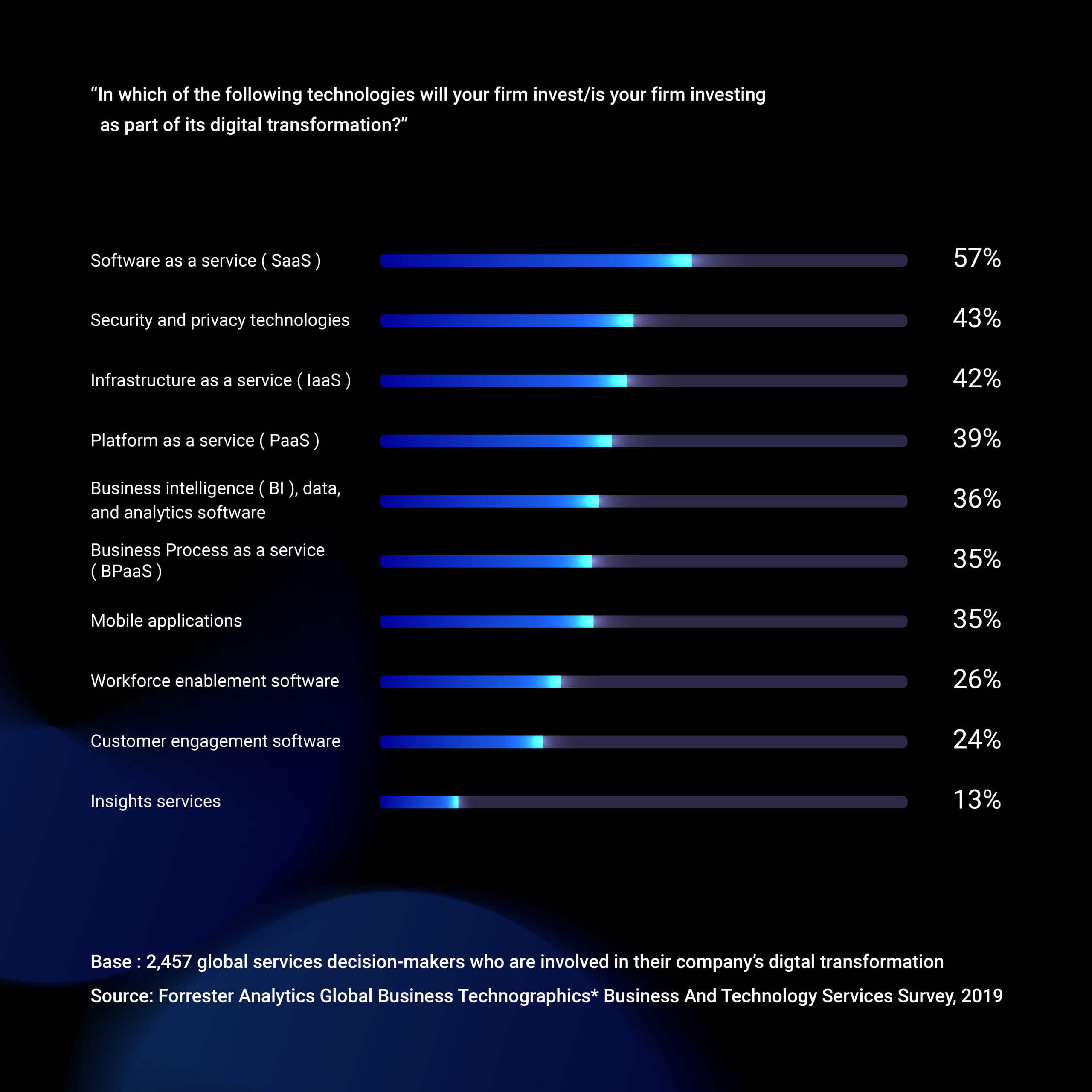
Balancing the cost of operations while maintaining a healthy ROI can be challenging. However, according to a study by Forrester,[i] companies plan to invest heavily in SaaS. So how can a company strike the right balance between profitability and reducing the operational cost of SaaS to maximize cloud investments?

SaaS operations: Opportunities and challenges

Managing and operating cloud assets is significantly different from traditional on-premises operations and requires a deep understanding of how to do it effectively, as well as the ability to troubleshoot any issues that arise.

The rise of remote working models and ease of SaaS adoption can lead to SaaS sprawl within an organization. Therefore, it is crucial for businesses to make strategic SaaS decisions as a part of the core digital business transformation in order to stay competitive in the current scenario. Organizations often use multiple solutions based on their varying needs across departments or operations. However, these SaaS solutions often share features that can be leveraged for other processes without the need to purchase an entire solution. The use of shadow IT and unsanctioned applications for these purposes may add extra burden to operational expenses.

Having visibility and control over the authorization of SaaS applications can help organizations apply the right security policies and controls. The uncontrolled growth of SaaS solutions in an organization can create significant issues with the governance of the ecosystem. With a massive amount of data to manage across parties, managing assets or assigning a super admin responsible for user access and control becomes challenging.

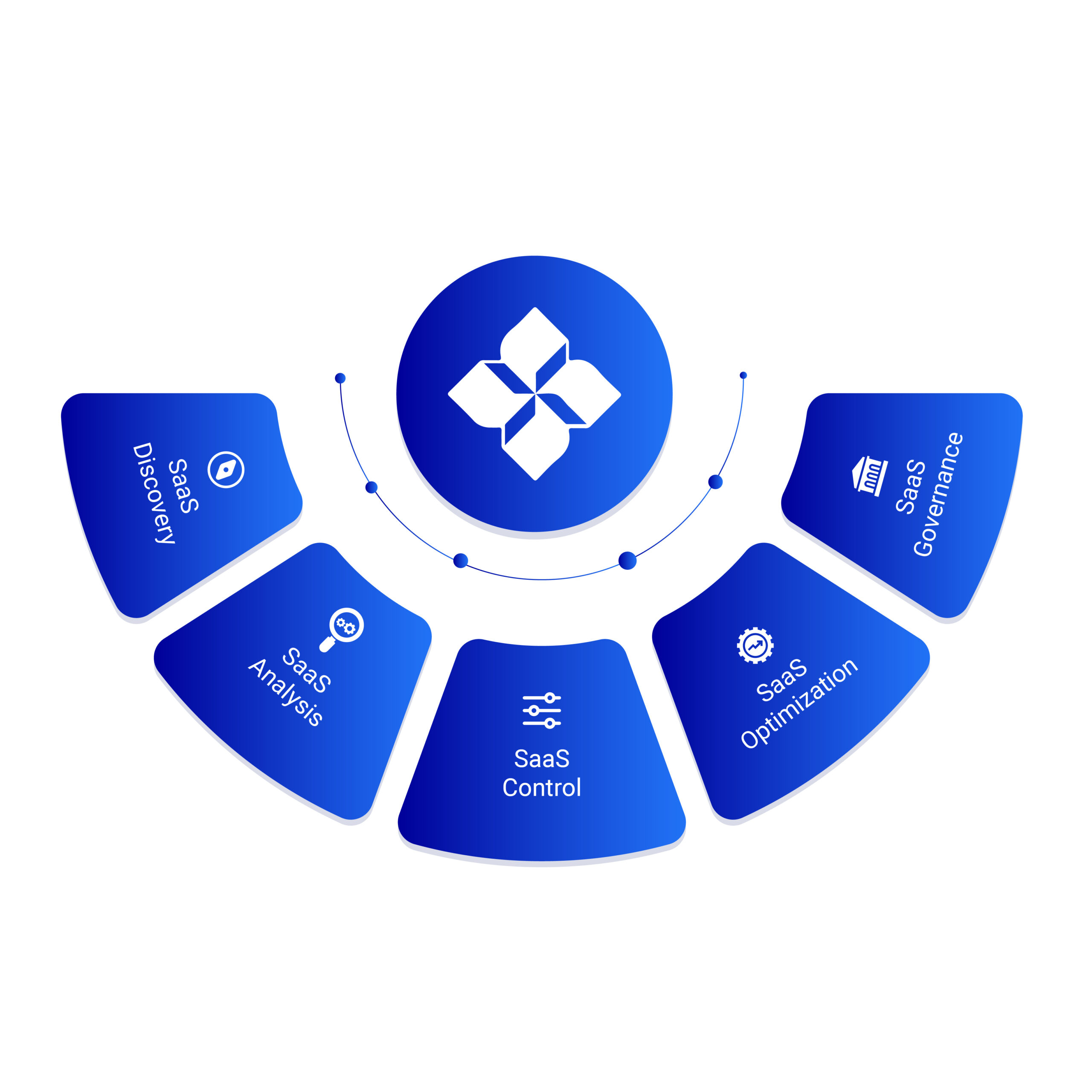
Elements of SaaS operations and management lifecycle

Effective SaaS operations depend on a series of critical factors, including:

  1. SaaS discovery: Identifying all the SaaS applications that are currently in use in the organization, regardless of whether they were procured through IT or by individual departments.
  2. SaaS analysis: Analyzing the usage and cost of each SaaS application to determine their value to the organization, as well as identifying any risks or security concerns associated with the use of these applications.
  3. SaaS control: Implementing policies and procedures to manage the use of SaaS applications in the organization, including controls to manage user access, data security, and compliance with regulations.
  4. SaaS optimization: Optimizing the use of SaaS applications to reduce costs, increase efficiency, and improve performance, such as through rightsizing licenses or consolidating vendors.
  5. SaaS governance: Establishing guidelines, policies, and procedures to manage the use of SaaS applications in the organization, including compliance with regulatory requirements, and monitoring and enforcing adherence to these guidelines.
Intelligent SaaS management lifecycle

Cloud operating methodology is a high-level representation of the systematic management of cloud/SaaS applications across the organization. It provides companies with the blueprint to effectively organize the capabilities that deliver user value through the systematic application of SaaS/cloud services.

However, there are often challenges when many SaaS services are used within an organization. It can be difficult for the company to have visibility into the SaaS spending and to understand the areas of applications or operational dependencies of multiple teams on them. Additionally, the use of multiple SaaS services can increase the number of touchpoints or user accessibility, which can reduce the security of the environment. As a result, it may increase compliance spending and make reputation management of the organization more challenging.

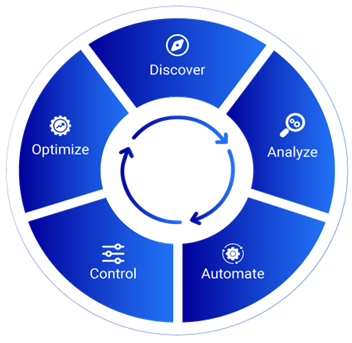
Considering all these factors, having a robust framework that optimizes the operational challenges of an organization around a cloud-based SaaS ecosystem can be beneficial. As the company moves towards analyzing the discovery and utilization of SaaS, it can help them to identify a roadmap for its adoption. The journey, in this case, typically is as follows:

  • Discovery: Identify the cloud/SaaS applications and build a catalog by department and function.
  •  Analyze: Analyze the applications based on usage, integration points, security, and compliance.
  • Automate: Automate all the integration points and SaaS testing.
  • Control: Get SaaS insight, secure SaaS operations, and manage user access.
  • Optimize: Optimize SaaS users, access, license, and subscription costs.
Intelligent SaaS management lifecycle

Once the operational requirements and lifecycle management are established, the question becomes how to leverage them to drive business transformation and optimize the SaaS ROI. An intelligent SaaS management platform can be a valuable tool in this effort. Let’s explore how it works.

CloudNuro.AI: Intelligent SaaS management platform

CloudNuro.AI SaaS management platform helps prevent SaaS sprawl and brings observability and actionable insights into SaaS applications. Given the current economic scenario, having a strategic partner like CloudNuro.AI can help organizations reduce SaaS expenditures. Businesses are aggressively looking to optimize their SaaS spending while gaining visibility and maximizing their SaaS usage. A SaaS management platform can help organizations to:

  • Increase visibility into SaaS usage.
  • Improve manageability and automate repetitive SaaS administration tasks.
  • Improve consistency of security identities and data across SaaS applications.
  • Optimize SaaS license entitlements based on consumption.
  • Drive adoption of SaaS apps and measure the performance of apps and integrated components.
  • Drive continuous improvement through insights and automation.

Maximize your cloud investments

Organizations that lack standardized governance for multiple SaaS applications may experience negative impacts on SaaS growth. By understanding the usage patterns of SaaS tools, organizations can optimize their ROI.

Establishing discipline in SaaS usage and management can help companies to buy only what they need and pay only for what they use, minimizing recurring and wasteful expenditures on SaaS tools. This approach can also add value to business operations by enhancing the security and compliance of the ecosystem. If you are seeking to address the challenge of managing your SaaS budget, please contact us to learn how together, Beyondsoft and CloudNuro.AI can help your company maximize your cloud investments.   


[i] Forrester, “Best Practices for Software-as-a-Service Operations” (2020), https://www.forrester.com/report/Best-Practices-For-SoftwareAsAService-Operations/RES154097.

Banking on the future: Financial services and the metaverse

Companies are increasingly investing in the metaverse, which Gartner describes as “a collective, virtual shared space, created by the convergence of virtually enhanced physical and digital reality.” Metaverse is where the real world and virtual world collide, a mashup of technologies like augmented reality (AR), virtual reality (VR), blockchain, artificial intelligence (AI), and machine learning (ML), creating a digital experience that mirrors real life. It’s essentially the next evolution of the internet, with avatars and 3D, connected experiences.

When it comes to financial services and the metaverse, the time is now to prepare for adoption in this industry.

Metaverse is gathering steam

The global health pandemic accelerated the adoption and advancement of technologies such as blockchain, cryptocurrencies and NFTs, and AR/VR, which are crucial metaverse building blocks.

Gaming, in particular, has served as a gateway to the metaverse, opening new doors and experiences and revealing exciting possibilities. For example, Epic Games found that Fortnite players often socialize with their friends inside the gaming platform even after a game ends, providing opportunities for virtual events, such as when Ariana Grande stepped into Fortnite to deliver a virtual concert in 2021.

Major brands are also betting big on the metaverse. Most notably, Facebook rebranded itself as Meta and unveiled plans to build a metaverse. Other brands like Samsung and Adidas are purchasing “real estate” in metaverse platforms such as Sandbox and Decentraland, paying up to $2.4 million for digital property and renting land for up to $60,000 a month.

These brands are building experiences to engage with the estimated 2.4 billion people who will visit the metaverse by 2026. The global metaverse market is expected to balloon to $947 billion by 2030.

Use cases for financial services and the metaverse

But what does the metaverse mean for the financial services industry? Below are some compelling use cases awaiting financial services companies in the metaverse.

Transactions

Enabling digital transactions is the most obvious use case. For example, American Express is already investing in the metaverse, with plans to allow customers to use AmEx payments in virtual worlds.

Furthermore, cryptocurrencies are on the rise, with an increasing number of countries recognizing crypto as a legal tender. Simple and secure crypto transactions will likely form the foundation of the metaverse economy. In fact, AmEx is also eyeing services like crypto management and trading.

Consumer banking experiences

While consumer banking used to be primarily in person, these days, many consumers never set foot in their bank. While convenient, these online experiences can be highly impersonal.

The metaverse provides an opportunity to humanize consumer banking, offering a virtual destination where consumers can interact and ask questions, whether they’re applying for loans or opening accounts. The metaverse also provides the opportunity to expand products and services. Already, some digital-only banks connect customers to third-party services and cross-industry marketplaces.   

Robo-advisory investment banking

Robo-advisors have been around for a while. But in the metaverse, robo-advisory services will be up-leveled with more personalized, interactive experiences. Robo-advisors in the metaverse will be able to talk to consumers and answer questions, providing a more human-like experience.

Virtual meetings and onboarding

The metaverse promises new shared spaces and immersive experiences, changing how people interact. Virtual meetings and events will become more immersive, enabling people to move freely and interact in any language. The metaverse also impacts onboarding, providing more personalized, engaging learning experiences that improve knowledge retention.

Preparing for a metaverse future

The metaverse is a journey. While no one knows exactly what the destination looks like or when we’ll arrive, we know that the metaverse is our future.

The first step in preparing for the metaverse is digital transformation. Financial institutions must accelerate digital transformation initiatives and identify use cases across the different layers of the metaverse framework, including experience (dematerialization of physical objects), discovery (inquiring for information), the marketplace and meta-economy, spatial computing (bringing life to metaverse), and the human interface to the virtual world.

We already know many of the building blocks needed to realize this future, and it behooves financial institutions to build foundational competency in AI, ML, blockchain, cryptocurrencies and NFTs, and AR/VR technologies.

Financial institutions must also begin thinking about how to design personalized and relevant experiences and reimagine their products and services for a metaverse future.

Beyondsoft helps customers around the world accelerate digital transformation and prepare for success in the metaverse. We work with customers to perform initial discovery and design, identify required technologies, and build a technology roadmap. To learn more about how we can help your financial institution prepare for the metaverse, reach out to our experts.