Realize business potential with Gen AI this holiday season

The holiday season is quickly approaching, and retailers are gearing up for one of the biggest shopping seasons of the year as customers sort through a deluge of promotions across retailers. Email inboxes overflow with offers, and customers face overwhelming choices as they try to identify the best deals, which come in generic promotions for items they’ve already purchased – all of which just adds to their frustration.

This is where Artificial intelligence (AI) can deliver exciting opportunities for retailers to elevate their game this holiday season. Most experts would agree that retailers should approach AI thoughtfully, balancing customer needs, retailers’ immediate campaign needs, and overall corporate goals of growing the business.

Using generative AI to humanize interactions

Customers expect personalized shopping experiences. Until recently, sophisticated commerce, marketing automation, and advertising platforms used what you already knew about your customers to target them for new purchases. While using AI, you can create highly detailed customer profiles based on online behaviors, purchase history, and product reviews to predict future needs better, we are seeing an increasing need for humanized interactions.

Generative AI presents an enormous opportunity to uplift the customer experience by having human-like conversations with customers. This can take the form of online assistants that engage in human-like conversations with customers to solve issues and answer various questions. Generative AI can also simultaneously analyze thousands of product reviews and user images to generate a personalized summary tailored to the reader’s interests, level of understanding, and background. There are many applications for generative AI in this context.

Key example: a non-technical grandfather is presented with information and reviews about a product that generative AI tailors to his understanding while buying a technology gift for his grandson.

Establishing generative AI readiness

While AI can unlock big opportunities for the holiday season, retailers should identify high-value use cases to test the technology and take the key learnings from technical, functional, and business standpoints. As generative AI evolves, it may learn to use such data to dive further into other elements of the business, such as production and resource planning, and even direct collaboration with suppliers. Consider using these key steps to lay the proper AI groundwork and drive generative AI adoption for your company.

  1. Resources: Put the right team in place, as AI requires a different type of technical resource. This team should be comprised of professionals who understand data science, AI models, and their outputs, data ethics, and the details behind algorithms.
  2. Data: Carefully evaluate data sources since AI depends on high-quality data. Before embarking on your AI journey, analyze available data on inventory, customers, pricing, promotions, etc.
  3. Data Governance: You’ll need to document the data used for AI and implement access controls and policies to ensure quality, privacy, and compliance.
  4. Testing: Testing AI models is essential to fix issues before going live.
  5. Data/AI Ethics: Adopt AI responsibly, be ethical, and set realistic expectations about what AI will deliver.
  6. Security: AI comes with its own unique security risks your team needs to be ready to handle, things like AI-enhanced cyber attacks, data poisoning, model theft or inversion, evasion attacks, and more – all of these risks mean your team needs to be ready.
  7. Infrastructure: Plan for future growth by implementing the technical infrastructure needed for the continued development and expansion of AI capabilities.

Let us work together to achieve your AI vision

We are focused on helping you overcome business IT challenges that relied on our:

  • Expertise and Experience: With a focused practice on AI and machine learning frameworks, we are a forward-thinking company with expertise to understand complex systems and recommend data-driven solutions tailored to your unique needs.
  • Industry Insight: We understand the pressures businesses face today and how emerging technologies like AI can drive real impact.
  • Commitment to Transformation: We view AI as a journey of continuous learning and improvement and are constantly expanding our capabilities to transform operations with AI.
  • Trusted Governance Approach: With rigorous processes like an annual ISO 27001 audit, we can provide the governance required to ensure customer data ethics and privacy.

Tap into our expertise to turn your organization’s AI vision into reality. We have helped many customers across all verticals realize theirs. Contact us today to see how we can do the same for you.
Strengthening your business strategy with data, analytics, and AI

During the recent meeting at American Chamber of Commerce in Costa Rica (AmCham), I shared the evolving landscape of data, analytics, and AI (Artificial Intelligence), emphasizing their role as pivotal tools in modern business strategy and decision-making to 40 participants. In this blog, I added analyst observation and two use cases on the paradigm shift in using AI.  

Today, every click, every transaction, and every interaction is a treasure trove of insights. The digital age is amassing data at an unprecedented rate. We harness the capabilities of data, analytics, and AI, to help our customers extract invaluable insights to drive innovation and operational efficiency.

As Chris Howard, Distinguished VP Analyst and Chief of Research at Gartner, highlights, “For example, generative and other types of AI offer new opportunities and drive several trends. But deriving business value from the durable use of AI requires a disciplined approach to widespread adoption along with attention to the risks.” This disciplined approach towards AI adoption underpins the transition from a reactive stance to a proactive one, fostering a culture of continuous learning and innovation.

The synergy of data, analytics, and AI allows businesses to transition from a reactive stance to a proactive one. It’s not just about understanding what has happened but predicting what will happen next. Predictive analytics, a shining star in this new era, is empowering businesses to anticipate market fluctuations, customer behaviors, and operational dynamics, enabling pre-emptive strategies and agile business models. Moreover, real-time data processing is transforming the way businesses respond to evolving situations, allowing for immediate actions, adjustments, and uncovering unmet needs.

Highlighting the real-world impact of AI with Beyondsoft

Our journey in harnessing AI began over five years ago, to drive sales growth through machine learning. One exemplary case is our collaboration with a Seattle-based premium cruise line. Through behavior-backed analytics, we were able to garner insights into the profitability of various amenities, enabling the cruise line to make informed pricing adjustments. This not only increased revenue but also enhanced their ability to upsell new services to passengers with similar profiles and consumption behaviors.

Moreover, our endeavor with a leading low-cost airline showcases the potential of AI to generate more revenue.  Utilizing purchasing behavior patterns, we helped the airline identify passengers most likely to opt for additional purchases. This enabled highly targeted campaigns and dynamic pricing strategies, thereby increasing sales. Further analysis revealed new revenue streams, exemplifying how data, when utilized effectively, can significantly impact a business’s bottom line.

Fast forward to today, we’ve enriched our AI toolkit with a chatbot, machine learning, and generative AI, striving to provide accurate and contextually relevant information. The integration of BIOPs™, a familiar AI foundational engine to many of our customers, that houses the auto machine learning framework and facilitates the creation of a diverse range of AI services to the multifaceted AI platform.

AI: The unfurling horizon of possibilities

AI is not just about automation; it’s a canvas of creativity, personalization, and a wellspring of continuous learning and innovation. It enables businesses to craft bespoke customer experiences, and tailor products, services, and communications to individual needs, enhancing customer satisfaction while fostering loyalty and long-term engagement.

In the realm of strategic planning and decision-making, AI acts as a visionary, enabling businesses to foresee opportunities and challenges, and facilitating strategies that are both resilient and forward-thinking.

Next steps

At Beyondsoft, we don’t view data, analytics, and AI as mere tools but as catalysts for innovation. Our approach is holistic. By intricately weaving data strategy, AI, machine learning, and business intelligence, we aim to create solutions that are tailored, efficient, and future-ready. It’s not just about data; it’s about crafting narratives, telling stories, and driving meaningful change.

If you are looking for a leader in data and analytics and would like to consider exploring AI to strengthen your business strategy, tap into our expertise to shape your business outcomes. We’ll help you translate concepts into tangible applications and develop an AI strategy to secure leadership support. Reach out to us today.

References

  1. Gartner Identifies the Top 10 Strategic Technology Trends for 2024
  2. How machine learning unlocks data to target customers & drive sales – Beyondsoft Consulting
  3. Transforming Knowledge Management using Generative AI – Beyondsoft Consulting

Beyondsoft unveils Cloud Center of Excellence as a Service

Digital transformation has evolved in recent years and cloud technology is more than an enabler in business transformation. It is a key component to drive business forward. Cloud technology powers applications, data infrastructure and AI. The next wave of digital transformation is to embrace the concept of the Cloud Center of Excellence (CCoE) to expedite the adoption and governance of cloud solutions.

A Cloud Center of Excellence is typically a multidisciplinary team that provides leadership, best practices, standardized operational processes, as well as support and training to help you quickly address business problems with the adoption of cloud technologies.

According to Gartner research, more than 85% of organizations will adopt a cloud-first approach by 2025 and will not be able to fully execute their digital strategies without using native cloud architectures and technologies. This underscores the importance of robust adoption and governance strategies for these technologies for businesses.

“As a Service” Approach

Beyondsoft’s Cloud Center of Excellence serves as an extension of your team regardless of the stage of your cloud adoption. With CCoE you adopt cloud technologies quickly and securely to meet your business objectives. We are your ally to optimize cloud costs. CCoE is a viable alternative to those who need just-in-time expertise for a short or long-term cloud project. Our suite of Microsoft specializations validates our expertise in delivering scalable cloud projects with measurable outcomes.

“Choosing a Cloud Center of Excellence (CCoE) as a Service provides you with immediate access to expert guidance, speeding up the adoption and optimization of the cloud without the prolonged setup and costs associated with establishing an in-house team. By using external experts, you reduce the risks associated with costly cloud implementation errors, allowing your team to focus on their core business functions while running cloud operations efficiently,” says Alexandre Perazza, global leader of solutions and services at Beyondsoft.

The CCoE plays a crucial role in security, establishing practices and controls that ensure data and applications are protected in the cloud and complies with your internal governance, regulatory requirements, minimizing risks and promoting secure usage.

Integration with AI

The unification of generative AI into a CCoE creates a dynamic and personalized approach to cloud management. With AI-driven insights, infrastructure implementations are rigorously tailored to specific needs, ensuring efficiency and cost savings. AI’s ability to proactively generate security policies in response to evolving threats ensures robust and compliant cloud environments. Moreover, the rapid generation of ideal solution architectures and proactive problem-solving skills reduce the time between design and implementation, reducing potential disruptions and ensuring customers have a simplified and resilient cloud journey.

Here are some specific examples of how AI enhances the CCoE’s capabilities and provides real value to customers:

  • Dynamic Resource Optimization: AI can continuously monitor cloud resource usage and apply predictive analytics to optimize resource allocation based on demand. This means that you pay for what you use. This leads to significant cost savings and more efficient cloud operations.
  • Predictive Maintenance and Security: AI can detect anomalies in cloud infrastructure and data, predicting potential system failures or security breaches before they occur. By proactively identifying and addressing these issues, AI helps prevent downtime, data loss, and security incidents. This not only cuts down on downtime cost but also enhances the overall security stance.
  • Proactive Problem Solving: AI-driven insights can help CCoE teams rapidly generate ideal solution architectures and proactively address potential issues. This reduces the time between design and implementation, minimizing disruptions, and ensuring you have a smoother and more resilient cloud journey. You can benefit from solutions that are continuously refined by AI, leading to greater efficiency and innovation.
  • Compliance and Governance: AI can assist in establishing and enforcing governance standards, ensuring cloud adoption aligns with regulatory requirements. By continuously monitoring compliance and automating policy enforcement, AI minimizes risks associated with non-compliance and ensures secure usage of cloud resources.

“By integrating AI in our CCoE approach, we offer responsive, tailored services. AI-driven insights lead to efficiency, cost savings, and innovation, benefiting you and your team,” emphasizes Perazza.

With CCoE, WeVets, our customer, improved IT environments and saved up to 40% on total operation costs. WeVet adopted governance practices on financial efficiency which led to cost predictability, risk mitigation, and accurate decision-making process.  

Next steps

Tap into our expertise to strengthen your organization’s cloud operations and security posture. We have helped many customers across all verticals to improve their cloud operations. Contact us today to see how we can do the same for you.
Cybersecurity: 8 proven ways to level up your security management operations

This blog is co-authored by João Labre – Director of Modern Work and Security, and Antonio Briceño, Country Manager for Costa Rica.

You’re navigating the ever-changing threat landscape, and you know that building the muscle for robust security operations is paramount. Protection from a technology or SaaS solution only takes you so far. You need to develop a culture of security awareness to seriously understand and honestly assess security awareness at all levels.

We share our tried and tested strategies to enhance your organization’s security management posture. As cybercrime becomes more prevalent, adopting a reactive approach could not only divert resources away from your core objectives  – it could also inflict irreparable damage to your credibility.

1. Cybersecurity is an Organizational Priority

Effective defense strategies against cyberattacks begin with acknowledging that security is not just an IT concern. CEOs and senior executives must lead by example  – modeling that security is everyone’s responsibility and aligning strategies and resources accordingly. Budget allocation is a crucial aspect, and cybersecurity should be seen as an investment rather than an expense. Allocate a budget that allows your organization to acquire the necessary resources to protect itself effectively. Make sure that the C-Suite understands the importance of this investment in securing your organization’s future.

2. Comprehensive Security Management

The demand for cybersecurity industry workers continues to fall short of the supply of skilled practitioners  – with 3.4 million unfilled job vacancies. The chances are that your in-house security team is stretched thin managing your current cybersecurity operation.  Security management covers a broad range of activities, from continuous education, risk assessment, and compliance to incident response and monitoring. To fortify your security management operations, adopt a holistic approach that covers all aspects of security. Work with an experienced, trusted partner such as Beyondsoft to develop a robust framework that integrates all aspects of your approach, to ensure that no vulnerability is left unchecked.

3. Time to Adapt to Remote Work Realities

Remote work has introduced new attack vectors for organizations. With approximately 40% of employees now working a hybrid model or full-time remotely, security management operations must adapt to this new reality. In parallel hackers are leveraging collaboration tools beyond email — including Slack and WhatsApp — to carry out attacks. Provide your remote workforce with the necessary tools and training to maintain security standards, scrutinize suspicious communications, and remain vigilant regardless of their location. Security operations must extend beyond the office to ensure comprehensive protection.

4. Partner for Managed Detection and Response

When dealing with prevailing and emerging cyberattack vectors, seeking expert guidance is essential. Teams benefit greatly from the insights of specialists who can tailor strategies to your organization’s unique needs.  A partner with a global cybersecurity track record of putting their managed detection and response provision to the test is invaluable as you navigate complex, local regulatory requirements. Choose an ISO 27001 certified partner that has maintained their credential over a sustained period to protect against the most common  – and emerging attack vectors. Similarly, security specializations from Microsoft Azure require business case traction – another solid indicator of a partner that specializes in cybersecurity operations and management.

5. Culture and Training

Building a human-centric culture of security awareness is the most important defense against cyberattacks.  Every member of your organization must understand their role in preventing and thwarting cybercrime. Your employees need to understand what to scrutinize so that they can detect phishing scams in their emails and WhatsApp messages, and they need to know how and when to store and share sensitive data. Training sessions need to be refreshed and conducted quarterly to ensure everybody is educated on the ever-changing threat landscape.

6. AI: A Double-Edged Sword

It’s no surprise that Artificial Intelligence (AI) is used more frequently by cyber criminals to design, personalize, and distribute malware.  Defenders need to be as adept as attackers in leveraging the latest tech. The good news is that AI can assist defenders with innovative automation that facilitates and expedites incident response. Note though, that there is no substitute for human decision-making. The most effective approach to applying AI to your security management is to build a ‘Fusion Team’ comprised of developers, users, and business users to take a multidisciplinary approach to applying AI to your security operations and threat management.

7. Monitoring and Response

Vigilant security management involves continuous scrutiny of your existing security approach and tracking your data governance. Given that cyber threats evolve and shift, you need to revisit your security management plan and test your incident response plan regularly to maintain its effectiveness. Don’t assume that ‘no news is good news’ – it takes a concerted effort to stay ahead of the bad news.  It’s no longer ‘if’ there’s an attack, it’s ‘when’ – and you have to be prepared with monitoring and proactive mitigation practices.  Exercise sapiency – in other words, be educated and self-aware of the gaps in your security management plan, and ensure you’re up to date on the trends, methods, and technologies both in cybercrime and cybersecurity.

8. Shared Responsibility

Security management is akin to a change management exercise: how do you keep vigilance top of mind?  Remember that your cloud providers know how to handle security better than an in-house team – they face attacks of every type every day. Cyber security is a joint effort, so understand the cloud services you’re buying, where you’re responsible, and fine-tune your security services for your needs. Work with your security operations partner to define roles and responsibilities.

Tap into our expertise to strengthen your organization’s security posture. We have helped many customers across all verticals to fortify their security operations. Contact us today to see how we can do the same for you.
How Beyondsoft unlocks IT innovation and business success with Microsoft specializations

Microsoft is one of the premier IT cloud providers, offering an array of technology to meet business needs. But even with Microsoft solutions in place, there is the uncertainty of not understanding all the capabilities and underutilizing the tools. In addition, familiar IT pain points still present themselves with Microsoft implementations, such as software compatibility, maintenance, storage, network, and data security.

Working with us, an IT consultancy with extensive experience in Microsoft solutions can help immensely. We have earned many Microsoft specializations demonstrating our in-depth expertise and commitment to be your first-rate partner for digital transformation.

Here we discuss what Microsoft specializations mean, why they are important, and how we can help you leverage Microsoft tools to the greatest extent possible.

Why is Microsoft specialization important to you?

It is as true for Microsoft as it is for any IT technology – most companies utilize only a small percentage of the full capabilities of Microsoft solutions. A specialized Microsoft solution partner can help your organization increase that percentage, ensuring you are making full use of the product features and realize cost savings fast.

Microsoft awards specializations to solution partners who have demonstrated technical expertise with Microsoft tools within specific contexts. Just as a professional driver can bring out more of the capabilities of a race car than an amateur, an IT consultant with Microsoft specializations can help you gain more benefits from the Microsoft technology you already have in place.

Beyond better use of existing solutions, your organization also may be able to unlock more opportunities by implementing additional Microsoft tools. Microsoft has a full suite of technologies, ranging from desktop applications to cloud solutions such as Azure, and all of them are fully integrated and secure. A company can gain a large competitive edge by moving more workflows and processes to Microsoft solutions, and a Microsoft solution partner, like us, can help you do so.

Our suite of Microsoft specializations

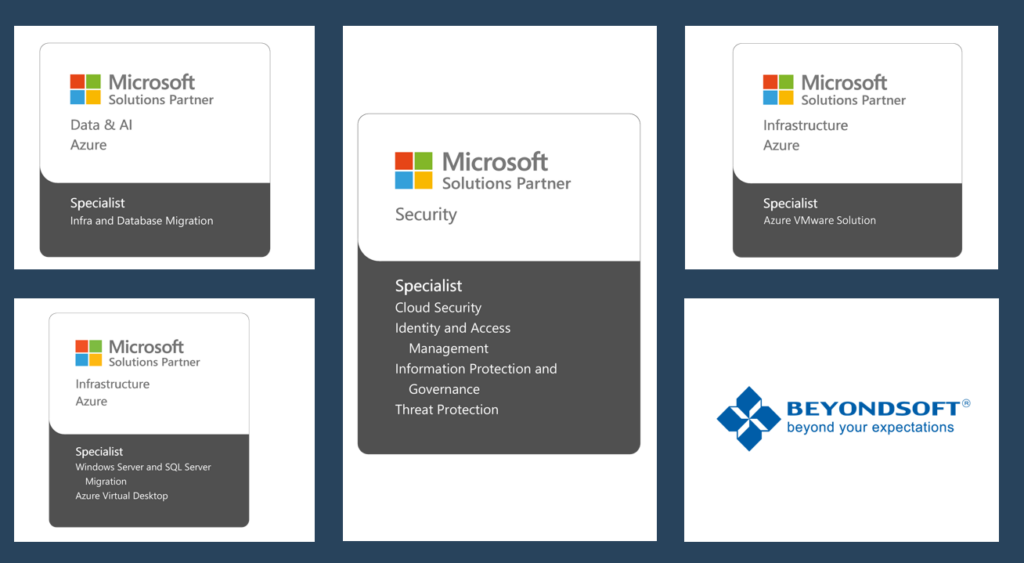
We have earned the following Microsoft Azure specializations: (1) Infra and Database migration to Microsoft Azure, (2) Microsoft Azure Virtual Desktop, and (3) Microsoft Azure VMware Solution, where our company is one of the few companies worldwide to hold this specialization.

As for the Security specializations offered by Microsoft, we hold all four: (1) Cloud Security, (2) ID & Access Management, (3) Information Protection & Governance, and (4) Threat Protection.

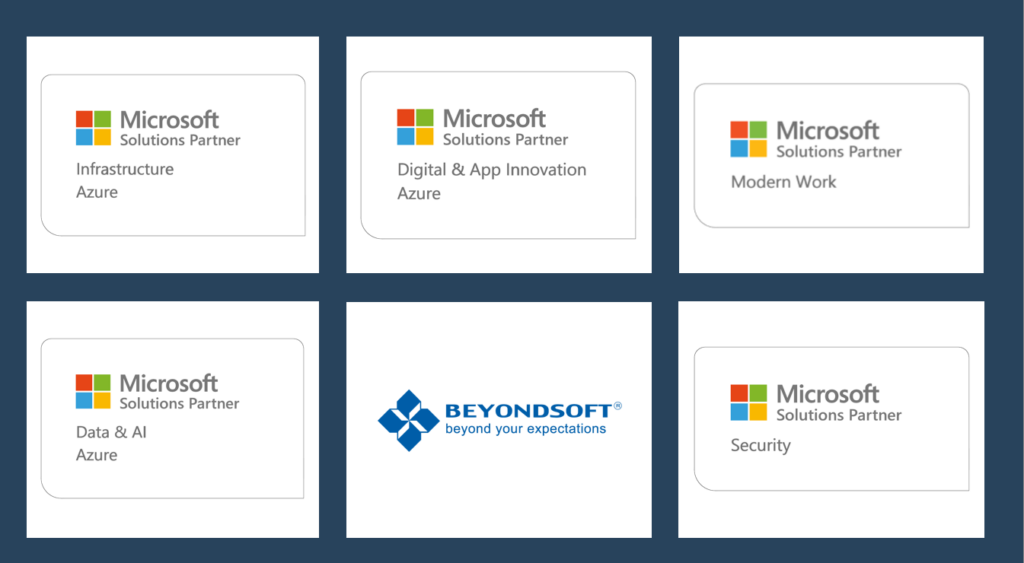
In addition, we have the Microsoft Solutions Partner designation in 5 of the 6 areas offered by Microsoft: (1) Infrastructure (Azure), (2) Digital & App Innovation (Azure)​, (3) Modern Work, (4) Data and AI and (5) Security.

The process of obtaining a Microsoft specialization is demanding and arduous. After meeting the prerequisites, we must comply with a third-party audit, requiring substantial time and resources for preparation. The specializations must be renewed annually, requiring annual audits. We maintain these specializations to demonstrate our commitment to keeping on top of our game in these areas of focus.

Of special note, we were recently awarded the Azure Expert Managed Services Provider (MSP) badge, only given to the most high-fidelity cloud managed service providers. This designation requires an even more intensive training and audit process. The payoff is that you have the confidence of working with the most capable partner possible for all Azure-related issues.

How we drive customer success with Microsoft specializations

We are a catalyst for our customers with respect to their cloud migrations, system upgrades, and other major IT events. Our Microsoft specializations serve as a demonstration of our ability to do so. In addition, our specializations result in Beyondsoft working on more IT projects, thus giving us more experience delivering results – yet another benefit for our customers.

“It is rewarding to be able to rely on a technical team like Beyondsoft, which offers the highest quality, knowledge, agility, and a focus on customer satisfaction.”

Eduardo Ângelo, WeVets, Director of IT and Customer Experience

As the business landscape changes, Beyondsoft has future plans for additional Microsoft specializations. Specifically, the Beyondsoft team is seeking to obtain three more specializations soon: (1) Analytics on Microsoft Azure, (2) AI and Machine Learning in Microsoft Azure, and (3) Low Code Application Development, to better assist customers with the Microsoft Power platform.

Tap into our expertise to maximize your company’s Microsoft capabilities

Make the most out of Microsoft cloud and IT technology by tapping into our expertise. With Microsoft specializations, we helped numerous organizations accelerate their business success. Contact us today to see how we can do the same for you.
Transforming Knowledge Management using Generative AI

The modern business landscape is evolving at an unprecedented pace. To stay competitive, organizations must find ways to efficiently manage and utilize knowledge across departments and roles. Fortunately, advancements in artificial intelligence (AI) present new opportunities to enhance knowledge management in transformative ways.

In essence, knowledge management is about capturing, distributing, and effectively using knowledge in an organized fashion. Modern knowledge management is interactive and dynamic. The integration of AI and chatbots enables you to engage with the system in real-time to view the information you need.  

However, even with AI and chatbots at the helm, modern knowledge management systems grapple with their own set of challenges:

Search Accuracy:

  • Despite using AI, most systems rely on question-answer mapping, resulting in an exhaustive list of potential questions that can be difficult to compile. This can cause chatbots to struggle with unfamiliar or unexpected queries.

Maintenance Challenges:

  • Formatting Complexity: Training AI models often require specific document formats, making maintenance intricate, especially for non-technical users.
  • Retraining Efforts: Even a small word change can be time-consuming and increases cost model retraining.
  • Multilingual Hurdles: Multilanguage support requires creating separate documents and training individual models, increasing time and cost investments.

Contextual Constraints:

  • Many AI-based systems lack the ability to grasp context, hindering their understanding of the true intent behind a question.

As we tackle these issues, the potential of generative AI shines brightly, hinting at a future where knowledge management is both efficient and intuitive, considering context as well.

Beyondsoft’s journey in AI: Pioneering the future with tangible innovations

Embarking on our AI voyage more than five years ago, we set forth with a singular vision: to revolutionize the way organizations harnessed knowledge through the power of AI. Our initial efforts were rooted in AI-driven tools like chatbots to redefine knowledge management. These tools, while groundbreaking, marked just the beginning of our ambitious journey. We focused on no-code maintenance tools, as we know the complexities of AI and we want you to use AI tools to complete your daily tasks rather than updating codes.

Through continuous learning, we created an auto machine learning (ML) framework to streamline the model maintenance process. We made AI maintenance more intuitive and time-efficient so that individuals without a technical background are not intimidated to use advanced AI.

AI for your business: The synergy of chatbots, auto ML framework, and generative AI

As we forge ahead, our journey in AI is guided by our commitment to innovation and inclusivity.  We continue to break new ground, ensuring that our AI solutions are user-friendly and cost-effective.

Building on our success with chatbots we expanded our AI toolset to a multifaceted AI platform. Our new AI platform houses a suite of solutions tailored to various industry needs. Within this expansive portfolio, the knowledge solution, rooted in generative AI, stands out. It’s designed to revolutionize how you manage both structured and unstructured knowledge easily. It’s more than just storage and retrieval, this solution harnesses the power of generative AI to understand, manage, and even generate knowledge, ensuring you consistently receive accurate and contextually relevant information. We also integrated BIOPs™, a familiar AI foundational engine to many of our customers, that houses the auto ML framework and facilitates the creation of a diverse range of AI services to the multifaceted AI platform.

With the new integration, the result is a harmonized solution, redefining the way businesses approach knowledge management. No matter your level of technical know-how, our comprehensive AI integrated solution gives you an edge on:

  • Natural Conversations: Our aim is to make interactions feel like genuine human conversations. For instance, if you ask about the benefits of program A, you’ll get a detailed summary that’s as if you were talking to an expert.
  • Contextual Understanding: Our solution goes beyond just spotting keywords. If you ask about the best product for your needs, it understands what you’re really looking for and gives you a personalized recommendation, not just a generic list.
  • Easy Customization and Updates: You can easily update or change things without needing technical skills. For example, if you want to update a product’s benefits, anyone on your team can do it effortlessly.
  • Fit for All: Whether you’re a small startup or a big company, our platform grows with you. It’s designed to meet your knowledge management needs, no matter your size.
  • Safe and Accurate Data: Your data security is crucial. We’ve got strong encryption and checks to make sure your information is safe. Plus, our AI gives you the right info with precision.
  • Real-time Insights: You’ll get valuable info on how users interact, common queries, and system performance. This helps your business improve and provides better knowledge based on what users want.
  • Multilingual Support: In today’s global business world, language shouldn’t be a barrier. Our solution works seamlessly in multiple languages, so you can serve diverse clients.
  • Strong Foundation: While we’re talking about our knowledge management solution here, it’s built on the solid BIOPs™ framework. That means you’re not just getting cutting-edge tech, but also a reliable and adaptable system.

By bringing these abilities together, our solution stands out in the AI-driven knowledge management field. It demonstrates our commitment to offer a platform that goes beyond the basic, making sure every question gets the right, helpful, and in-depth response.

“It’s clear that this combined AI solution is more than just a tool—it’s a paradigm shift in how businesses approach knowledge management. With configurable knowledge bases and personalized optimization, you’ll have full control over the system, allowing you to tailor it to best suit your specific requirements. In the intricate dance of technology and user needs, our solution gracefully leads, setting the stage for a future where knowledge is accessible, relevant, and empowering,”

says Marshall Ma, CEO of Beyondsoft Consulting Inc.

Next step

Looking to offer responses that understand context, enhance customer support, and boost efficiency and innovation? We can help you achieve your vision.

Strengths, Challenges and Future Growth: A Q&A chat with Beyondsoft Consulting Inc.’s CEO

I had the privilege to chat with our CEO Marshall Ma about the company’s vision, employee training, and his go-to method for de-stressing. Throughout our candid conversation, I have gained valuable insights into his experience, challenges, and aspirations.

Tell us about yourself.

Marshall: I am one of the founders of Beyondsoft and have worked for the company for 28 years. In 2015 I moved to the U.S. to drive the company’s most important market – North America. Our vision is to establish Beyondsoft as one of the top IT services companies in the Americas and Europe regions, focusing on cloud services, data, AI, infrastructure, cybersecurity operations, cost optimization, and business process management. I am grateful to work with a diverse team of talents who are rooted in customer success. I am proud of our achievements so far and look forward to conquering new sales wins.

“It is a team effort that has allowed us to expand our footprint in Costa Rica, Brazil, and the United Kingdom. It has been an incredible journey, filled with challenges and triumphs.”

–Marshall Ma

Many employees perceive you as an introvert and a man of few words. Do you agree with their observations?

Marshall: <Laughs> I am a former engineer who prefers deep thinking. As I grow in my role as a CEO, I am learning to listen more and ask a few clarifying questions. I now learn more from employees and dig deeper to help them adjust and adapt to changing circumstances. Like Bill Bradley, the American basketball player said: “Leadership is unlocking people’s potential to become better.”

What do you think is the biggest strength of our company now?

Marshall: Have you done your homework, Sharon?

Sharon: <Laughs> Yes, and I want to hear your perspective

Marshall: We have a strong heritage in technology services, and a proven track record with many mid-sized and enterprise customers. We have a flat hierarchy in this organization and remain agile in helping our customers to be successful. We keep pace with innovation and commit to continuous learning from customers, partners, analysts, and our competitors. We bring local and overseas expertise to work with our customers to build a sustainable digital journey.

Every customer has unique needs, and there is no one-size fits all solution. We unpack the must-haves, the changes and improvements needed, based on our customers’ company culture, business requirements, and technology readiness.  

“I am confident that collective knowledge from data, intelligence, and humans will accelerate business growth for our customers.”

–Marshall Ma

In addition, I do want to point out that we know Artificial Intelligence (AI) is transforming the way we live, work, interact and use insights to improve decision-making processes. We’re glad to have invested in AI more than five years ago, enabling our customers to automate repetitive tasks, get actionable contextual insights for accurate forecasting, and provide a more personalized user experience. Our team of data scientists are also leveraging OpenAI’s ChatGPT to enhance our AI Ops platform. We’ll share more news about that soon.

What have been the biggest challenges you’ve faced, and how would you change them?

Marshall: A challenge is an opportunity, and an opportunity is a challenge. I face challenges and opportunities daily. I have open, honest and tough discussions with my leadership team regularly. I don’t have all the answers, and I do my best to remove barriers and work with my leadership team to break down challenges into actionable tasks or opportunities to achieve the outcomes we need. John C. Maxwell, a popular American author, says it elegantly: “Leadership is about transforming challenges into opportunities for growth.”  

How do you see Beyondsoft change in the next few years, how would you prepare and what do you expect from your employees?

Marshall: New technologies will continue to develop over the next few years, especially in the field of AI, security and governance. This will bring profound changes to the IT services industry. Not only will our customers’ needs evolve, but traditional business models will also change, many jobs will be automated or replaced, and new jobs will emerge.

As a leader, I’m always on the lookout for investment in new technologies, keeping the organizational structure agile, and exploring new technology partner ecosystems to accelerate growth.

As we keep up with these changes, striking a balance between long-term growth and agility is a delicate move. I want to continue creating a culture that nurtures creativity, allowing us to leverage experiences from the past to better navigate future challenges. I also want to encourage employees to improve their skills and set aside time for training. I know our HR team has recently sent out a free training resources guide to employees

What is the ONE thing that you do regularly to maintain good mental health?

Marshall: I run 5km weekly . Exercise is a good outlet to de-stress and improves my concentration at work.

Sharon: Thank you for your time.

The SaaS economy: Reduce costs and maximize your cloud investments

Future of digital business

The SaaS (software-as-a-service) industry is continuously reaching new heights as a crucial contributor to digital transformation strategies. With the growth of the cloud economy, there has been a shift in how businesses offer their core services, placing greater emphasis on SaaS and subscription-based models.

According to Verified Market Research (VMR), the SaaS Management Platform market was valued at $113.82 billion in 2020 and is projected to reach $716.52 billion by 2028, growing at a CAGR of 27.5% from 2021 to 2028. The rapid growth of SaaS management platforms and the overall market size now require organizations to identify solutions that can help reduce unnecessary or wasteful SaaS spending.

The SaaS industry has gained customer confidence with its cloud-based data security and system availability. Additionally, the revenue generated by cloud services has captured the attention of investors leading to the emergence of a new SaaS economy. Within this ecosystem, businesses are developing new applications, and building business-specific applications by leveraging the best available SaaS applications. However, the payment models of SaaS applications can be a challenge to adopt. Unlike proprietary software models, SaaS platforms rely on recurring monthly or yearly payments, which may fluctuate based on the number of users accessing the platform.

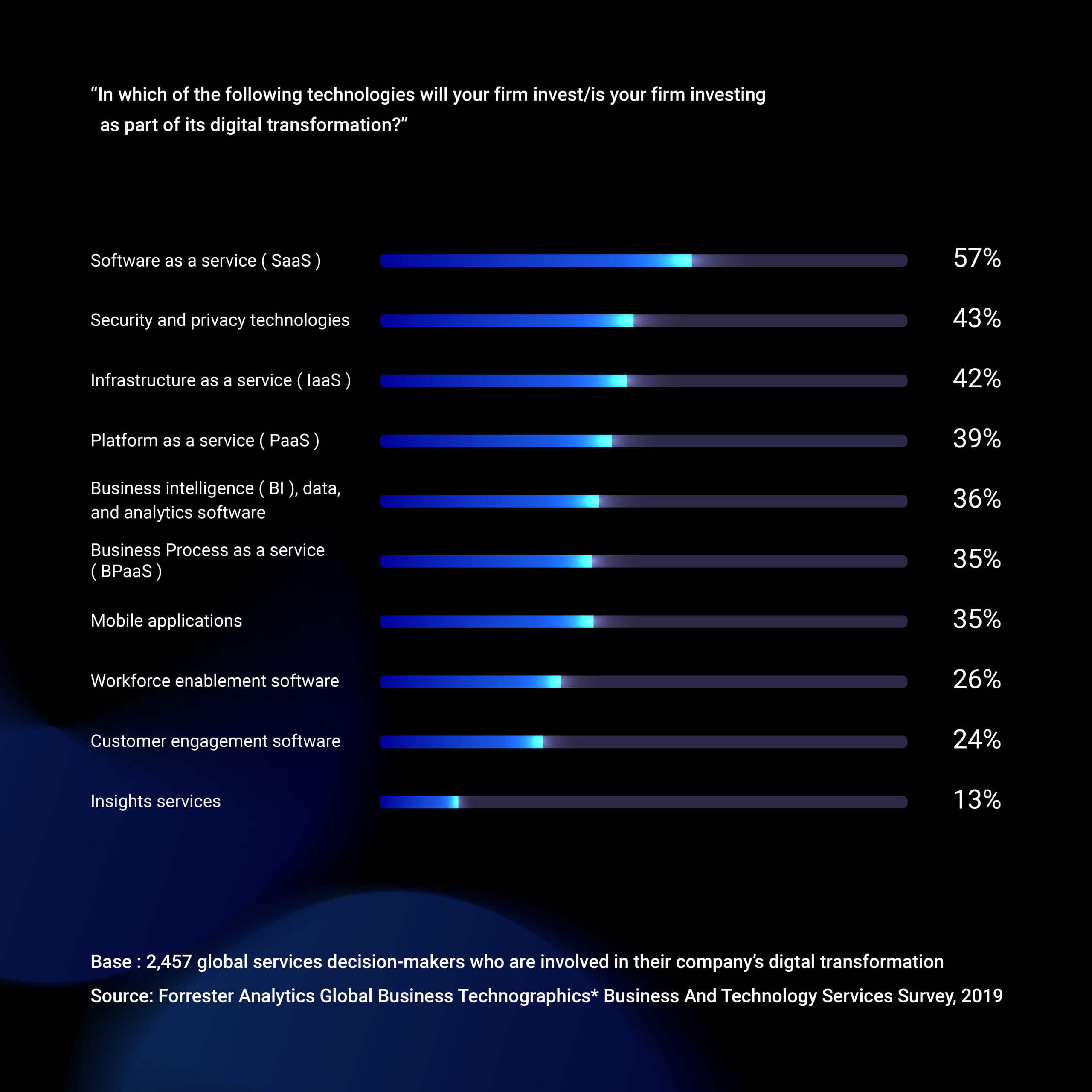
Balancing the cost of operations while maintaining a healthy ROI can be challenging. However, according to a study by Forrester,[i] companies plan to invest heavily in SaaS. So how can a company strike the right balance between profitability and reducing the operational cost of SaaS to maximize cloud investments?

SaaS operations: Opportunities and challenges

Managing and operating cloud assets is significantly different from traditional on-premises operations and requires a deep understanding of how to do it effectively, as well as the ability to troubleshoot any issues that arise.

The rise of remote working models and ease of SaaS adoption can lead to SaaS sprawl within an organization. Therefore, it is crucial for businesses to make strategic SaaS decisions as a part of the core digital business transformation in order to stay competitive in the current scenario. Organizations often use multiple solutions based on their varying needs across departments or operations. However, these SaaS solutions often share features that can be leveraged for other processes without the need to purchase an entire solution. The use of shadow IT and unsanctioned applications for these purposes may add extra burden to operational expenses.

Having visibility and control over the authorization of SaaS applications can help organizations apply the right security policies and controls. The uncontrolled growth of SaaS solutions in an organization can create significant issues with the governance of the ecosystem. With a massive amount of data to manage across parties, managing assets or assigning a super admin responsible for user access and control becomes challenging.

Elements of SaaS operations and management lifecycle

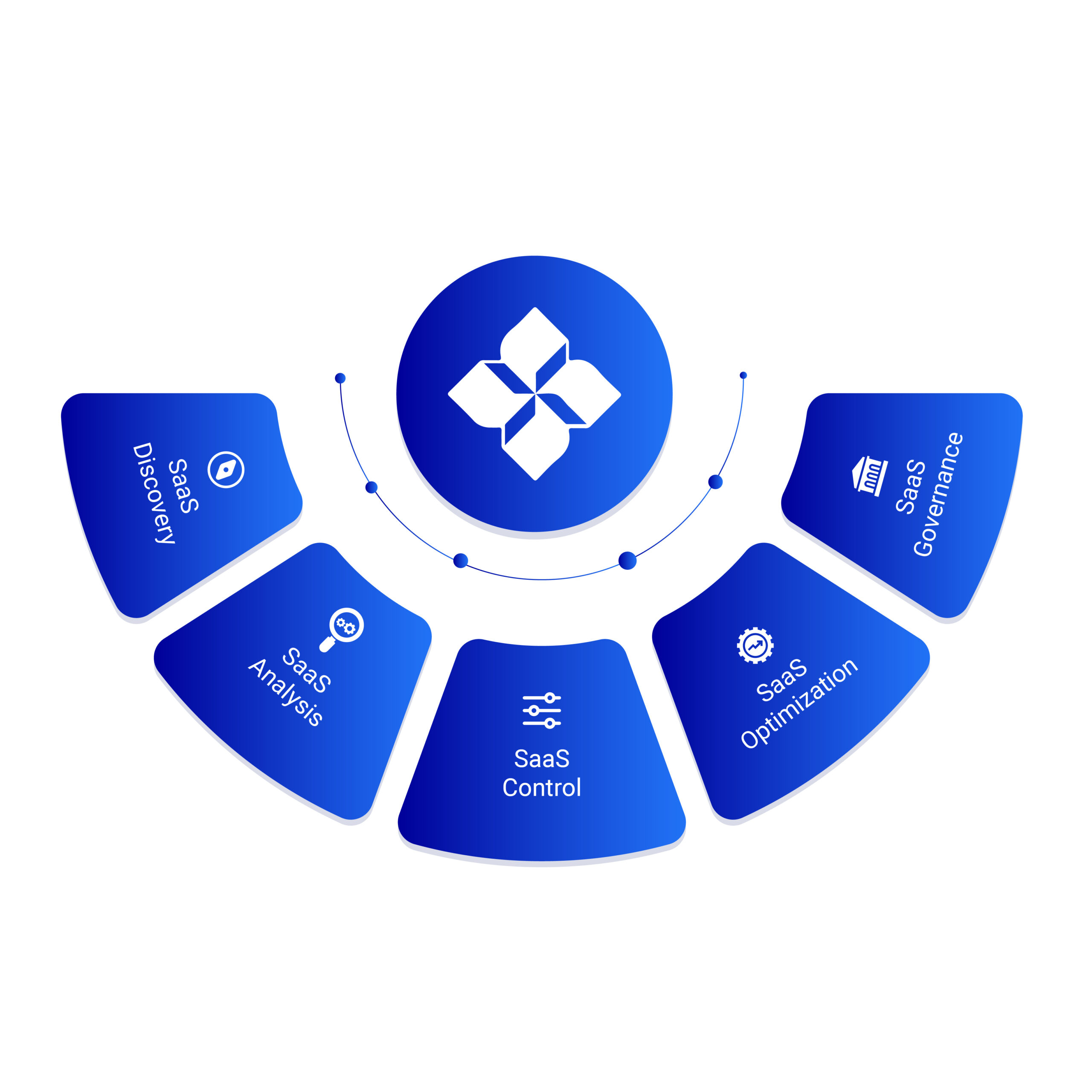
Effective SaaS operations depend on a series of critical factors, including:

  1. SaaS discovery: Identifying all the SaaS applications that are currently in use in the organization, regardless of whether they were procured through IT or by individual departments.
  2. SaaS analysis: Analyzing the usage and cost of each SaaS application to determine their value to the organization, as well as identifying any risks or security concerns associated with the use of these applications.
  3. SaaS control: Implementing policies and procedures to manage the use of SaaS applications in the organization, including controls to manage user access, data security, and compliance with regulations.
  4. SaaS optimization: Optimizing the use of SaaS applications to reduce costs, increase efficiency, and improve performance, such as through rightsizing licenses or consolidating vendors.
  5. SaaS governance: Establishing guidelines, policies, and procedures to manage the use of SaaS applications in the organization, including compliance with regulatory requirements, and monitoring and enforcing adherence to these guidelines.
Intelligent SaaS management lifecycle

Cloud operating methodology is a high-level representation of the systematic management of cloud/SaaS applications across the organization. It provides companies with the blueprint to effectively organize the capabilities that deliver user value through the systematic application of SaaS/cloud services.

However, there are often challenges when many SaaS services are used within an organization. It can be difficult for the company to have visibility into the SaaS spending and to understand the areas of applications or operational dependencies of multiple teams on them. Additionally, the use of multiple SaaS services can increase the number of touchpoints or user accessibility, which can reduce the security of the environment. As a result, it may increase compliance spending and make reputation management of the organization more challenging.

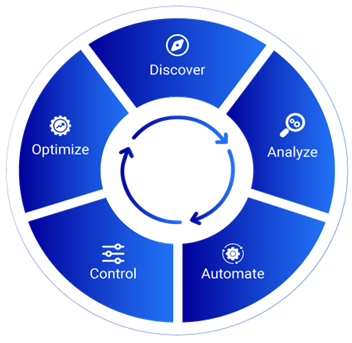
Considering all these factors, having a robust framework that optimizes the operational challenges of an organization around a cloud-based SaaS ecosystem can be beneficial. As the company moves towards analyzing the discovery and utilization of SaaS, it can help them to identify a roadmap for its adoption. The journey, in this case, typically is as follows:

  • Discovery: Identify the cloud/SaaS applications and build a catalog by department and function.
  •  Analyze: Analyze the applications based on usage, integration points, security, and compliance.
  • Automate: Automate all the integration points and SaaS testing.
  • Control: Get SaaS insight, secure SaaS operations, and manage user access.
  • Optimize: Optimize SaaS users, access, license, and subscription costs.
Intelligent SaaS management lifecycle

Once the operational requirements and lifecycle management are established, the question becomes how to leverage them to drive business transformation and optimize the SaaS ROI. An intelligent SaaS management platform can be a valuable tool in this effort. Let’s explore how it works.

CloudNuro.AI: Intelligent SaaS management platform

CloudNuro.AI SaaS management platform helps prevent SaaS sprawl and brings observability and actionable insights into SaaS applications. Given the current economic scenario, having a strategic partner like CloudNuro.AI can help organizations reduce SaaS expenditures. Businesses are aggressively looking to optimize their SaaS spending while gaining visibility and maximizing their SaaS usage. A SaaS management platform can help organizations to:

  • Increase visibility into SaaS usage.
  • Improve manageability and automate repetitive SaaS administration tasks.
  • Improve consistency of security identities and data across SaaS applications.
  • Optimize SaaS license entitlements based on consumption.
  • Drive adoption of SaaS apps and measure the performance of apps and integrated components.
  • Drive continuous improvement through insights and automation.

Maximize your cloud investments

Organizations that lack standardized governance for multiple SaaS applications may experience negative impacts on SaaS growth. By understanding the usage patterns of SaaS tools, organizations can optimize their ROI.

Establishing discipline in SaaS usage and management can help companies to buy only what they need and pay only for what they use, minimizing recurring and wasteful expenditures on SaaS tools. This approach can also add value to business operations by enhancing the security and compliance of the ecosystem. If you are seeking to address the challenge of managing your SaaS budget, please contact us to learn how together, Beyondsoft and CloudNuro.AI can help your company maximize your cloud investments.   


[i] Forrester, “Best Practices for Software-as-a-Service Operations” (2020), https://www.forrester.com/report/Best-Practices-For-SoftwareAsAService-Operations/RES154097.

Accelerate cloud migration and modernization

These days, every company is a technology company. Those who thrive employ modern technology to elevate productivity, efficiency, and sustainability and differentiate themselves from competitors. But over the years, custom application portfolios have grown increasingly complex, even before considering increased attrition and rapid change in programming languages, frameworks, and open-source software. This complexity can hinder the speed and success of cloud migration and overall modernization efforts. Discover how industry digital leaders use software intelligence to gain visibility into their portfolios, overcome complexities, and accelerate cloud migration and modernization.

The cloud migration analysis paralysis epidemic

Digital transformation has become a boardroom topic. Board members know that to survive, they need to migrate to the cloud and modernize legacy, monolithic applications to be able to respond to changing business needs faster and with greater agility. And while such projects appear simple enough on paper, they’re incredibly complex under the hood. Project complexity quickly escalates from obsolete, undocumented code to mounds of technical debt to complicated networks of dependencies. As these unexpected blockers pile up, it can be hard to know where to start, leading to analysis paralysis.

Software intelligence helps with rapid facts-based analysis of custom applications portfolios to support informed, vendor-agnostic cloud migration strategies. It enables the prioritization and segmentation of applications into categories such as rehost, refactor, rearchitect, rebuild, or retire. Furthermore, it helps organizations avoid U-turns in the migration journey by understanding code patterns that could potentially block migration.

The new frontier: app modernization

Despite significant public cloud growth, only a fraction of enterprise workloads have migrated to the cloud. Incredible value remains to be unlocked from modernizing custom, business-critical legacy applications. Challenges include a lack of documentation, a wide array of programming languages and frameworks, scarcity of skilled people who understand legacy technologies, and sheer complexity.

Of course, just as a surgeon would not undertake a complex procedure without an MRI, businesses should not embark on an app modernization journey without visibility into their legacy applications. Software intelligence provides visibility into the cloud migration and modernization journey, improving time to value and reducing overall risks. Software Intelligence analyzes the inner workings of your application portfolio, including data and source-code components and dependencies, to generate interactive architecture maps and insights into cloud readiness and software integrity.

Beyondsoft partners with CAST, a leader in software intelligence, to provide a fact-based analysis of custom source code in your application portfolio. The analysis helps rationalize your portfolio for cloud migration, identifies blockers, surfaces opportunities for containerization and PaaS, and even identifies open-source IP risks. This information is used to define the overall migration strategy and effort, saving organizations time, money, and frustration. CAST Imaging technology reverse-engineers dependencies and automatically generates interactive maps of the software’s architecture and structural integrity to accelerate and de-risk the modernization journey.

Transportation leader accelerates cloud migration and modernization

A global transportation leader with hundreds of custom applications wanted to expedite their migration to the cloud and modernize core systems. Their goal was to reduce costs, increase resilience, improve the client experience, and deliver new products and services faster.

In just two weeks, CAST software intelligence gained visibility into the client’s entire application portfolio, including health, blockers for cloud PaaS, and open-source components for each application. In addition, modernization plans were created for the near- and mid-term, identifying quick wins and opportunities to decommission or replace obsolete frameworks.

Fast-track your digital transformation with software intelligence

Cloud migration and application modernization is a complex undertaking requiring a detailed and fact-based understanding of your complete environment. By leveraging CAST software intelligence with Beyondsoft’s expertise in migration and optimization, you gain a much better understanding of complexities, dependencies, and priorities, so you can build a more holistic strategy.

Contact Beyondsoft to initiate an assessment of your custom application portfolio.

From cloud migration to automation: Insights to inform your 2022 IT planning

As we bid farewell to 2021 and peek around the corner at 2022, many of us are putting plans in place to increase efficiencies, boost product and service quality, or expand into new markets. To help inform your IT planning, we’ve put together a quick collection of articles. To find out how Beyondsoft can help your organization accelerate transformation in 2022, give us a call.

Increase performance, scalability, and cost-efficiency with a cloud migration

Migrating to the cloud offers benefits ranging from decreased licensing and storage costs to improved performance and scalability. A move to the cloud also positions organizations to advance their data analytics and even drive new revenue streams. But, of course, ensuring a successful data migration requires detailed planning and preparation as well as the right data migration strategy.

If you’re looking to migrate to the cloud, check out these helpful insights.

Migrating to the cloud? You need a cloud assessment

Migrating to the cloud is easier said than done, particularly for larger organizations. A cloud assessment can help ensure your strategy aligns with business objectives, understand and mitigate risks, and build a realistic roadmap.

Choosing the right data migration strategy

This article explores four common data migration strategies, including their advantages and how a data migration assessment can help you make the right choice.

Demystifying data migrations: Understanding the lift and shift

The right data migration strategy can save you time and money while increasing performance. This article explores the pros and cons of the lift-and-shift data migration strategy.

How a upsertable data lakes can simplify the data lake journey

Thinking about migrating to a data lake? Upsertable data lakes like Delta Lake and Hudi can ease your transition from traditional SQL databases to a data lake architecture. In this article, learn about the pros and cons and how upsertable data lakes reduce complexity.

Drive greater quality and productivity through automation

By taking advantage of technologies like artificial intelligence (AI) and machine learning (ML), organizations across every industry are reaping the rewards of automation, including improved efficiency, productivity, and profitability and reduced exposure to human-caused mistakes. If you’re planning to embrace the advantages of automation in 2022, be sure to read these blog posts.

Do yourself a favor: audit before you automate

When it comes to automation, complexity lurks under the hood. In this article, we explore why you should always audit before you automate.

Say hello to productivity with intelligent automation

See how intelligent automation technologies like AI can help your business eliminate manual processes to drive productivity, quality, and profitability.

Considerations for designing a test automation strategy

A good test automation strategy can save time and money and boost quality. Keep these considerations in mind when planning your strategy.

Harness the power of data analytics

AI and ML are also helping organizations access a treasure trove of data and glean actionable insights that position them to compete at a higher level.

How machine learning unlocks data to target customers & drive sales

In this article, discover how machine learning can help your e-commerce business convert data you already have into actionable insights and predictions to expand sales.

Position your organization to accelerate success

The global market constantly fluctuates and evolves—and organizations must also evolve. But aligning your teams—including globally distributed service center partners—to support business needs and drive growth takes the right expertise combined with the right technologies. Use these articles to position your teams for increased success.

Take a continuous improvement approach to organizational design

Keep your teams functioning at their best by taking a continuous improvement approach to organizational design. This article explores some benefits and best practices that have helped us grow successful, global teams.

Streamline operations across globally distributed contact centers

In this article, find out how machine learning streamlines the management of globally distributed contact centers.

Insights to help organizations manage globally distributed customer support partners

Ensuring a consistent customer experience and seamless operations across globally distributed customer support partners can be challenging. Get insights to help you streamline how you manage multiple partners.

Scale quickly and drive efficiency through outsourcing

Whether you need specialized talent or an entire service desk team, outsourcing can provide you with the answers you need to scale your organization and increase capacity while keeping your staff focused on your core business. Find out how outsourcing can help you achieve business goals without hiring additional people.

What’s the right fit: Professional services, managed services, or staff augmentation?

Discover how professional services, managed services, and staff augmentation compare—and which is the right service model for your business.

Tap skilled IT engineers without adding headcount

To stay competitive, organizations must embrace innovation. Find out how to access highly skilled IT engineers without increasing headcount.

Four signs that you need a managed services provider

Wondering if a managed services model is the right fit? Here are four signs that you need a managed services provider.

6 reasons why you should outsource your service desk

If you’re looking to expand, find out why you should consider outsourcing your service desk and what to look for when choosing a service provider.

Rely on a trusted, global technology partner

As a global IT partner, Beyondsoft thrives on innovating scalable solutions that solve customer challenges and accelerate business. In fact, both medium-sized enterprises and Fortune 100 companies rely on Beyondsoft to help them transform business–whether they’re migrating to the cloud, streamlining through DevOps, automating through AI and machine learning, or putting powerful predictive analytics to work.

To learn more about how we can help you accelerate business in 2022, be sure to contact us.